Kids Reimagine City Life with Empathy and Systems Thinking
If you could add one thing to your city to make it better… what would you build, and how would you want people to feel when they use it?
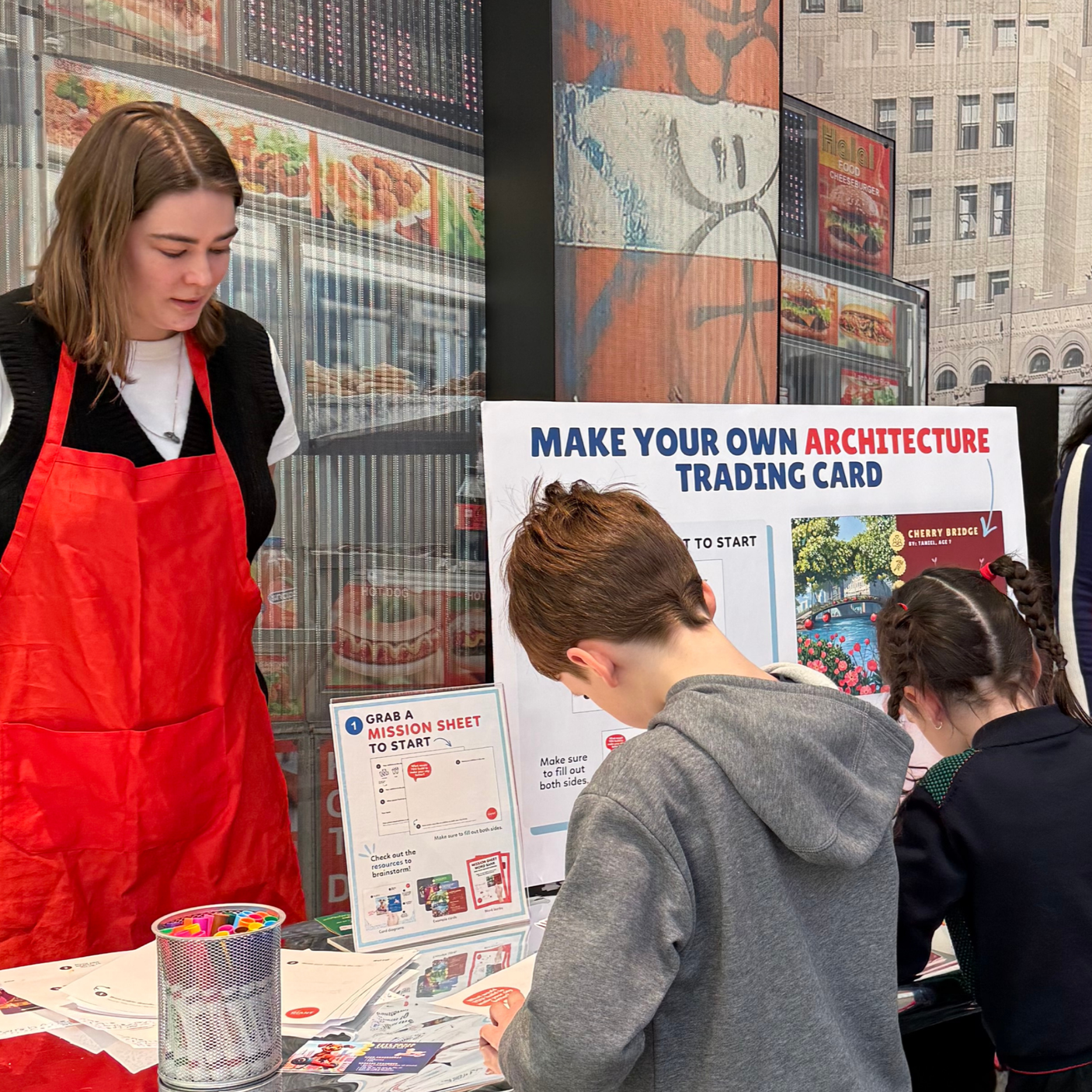
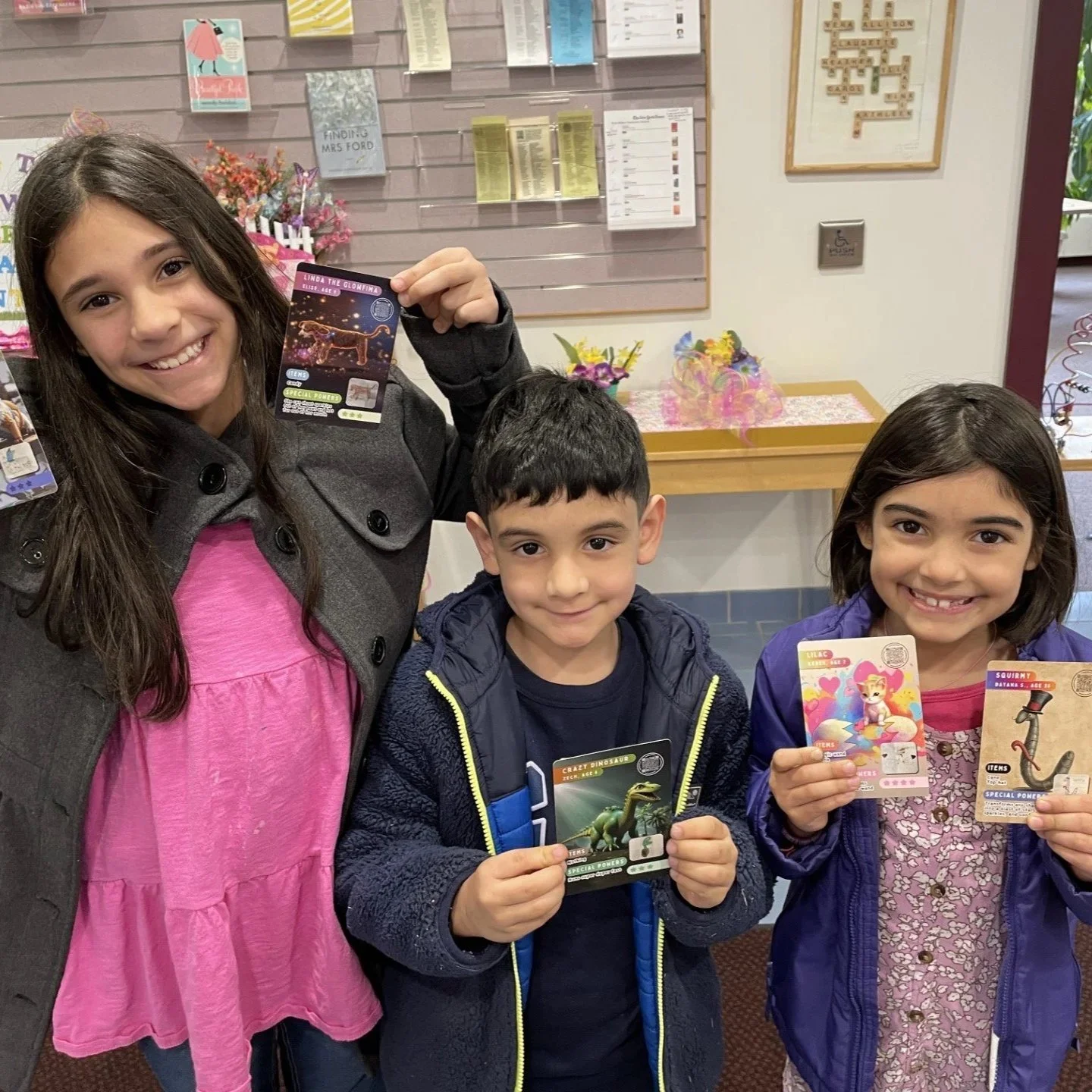
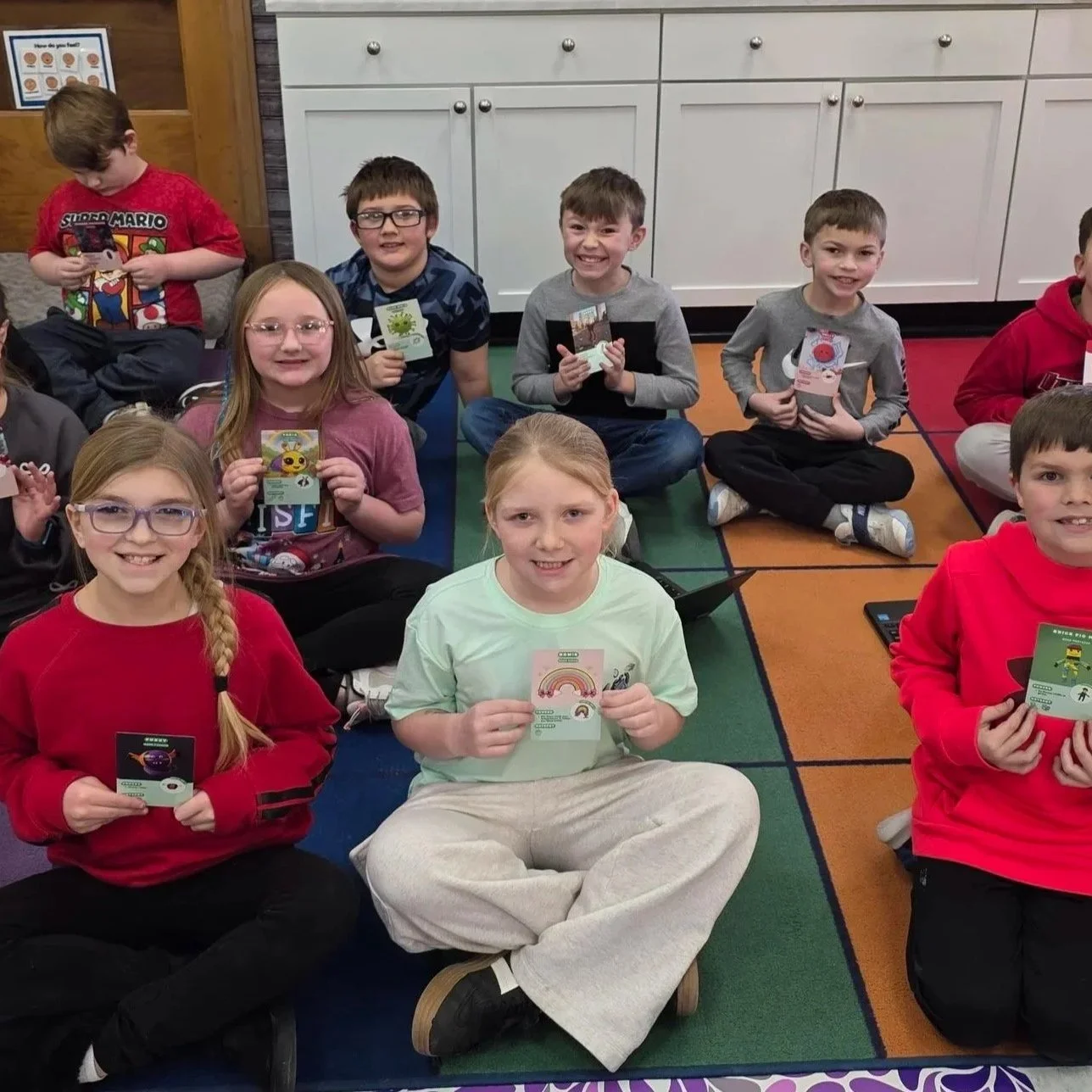
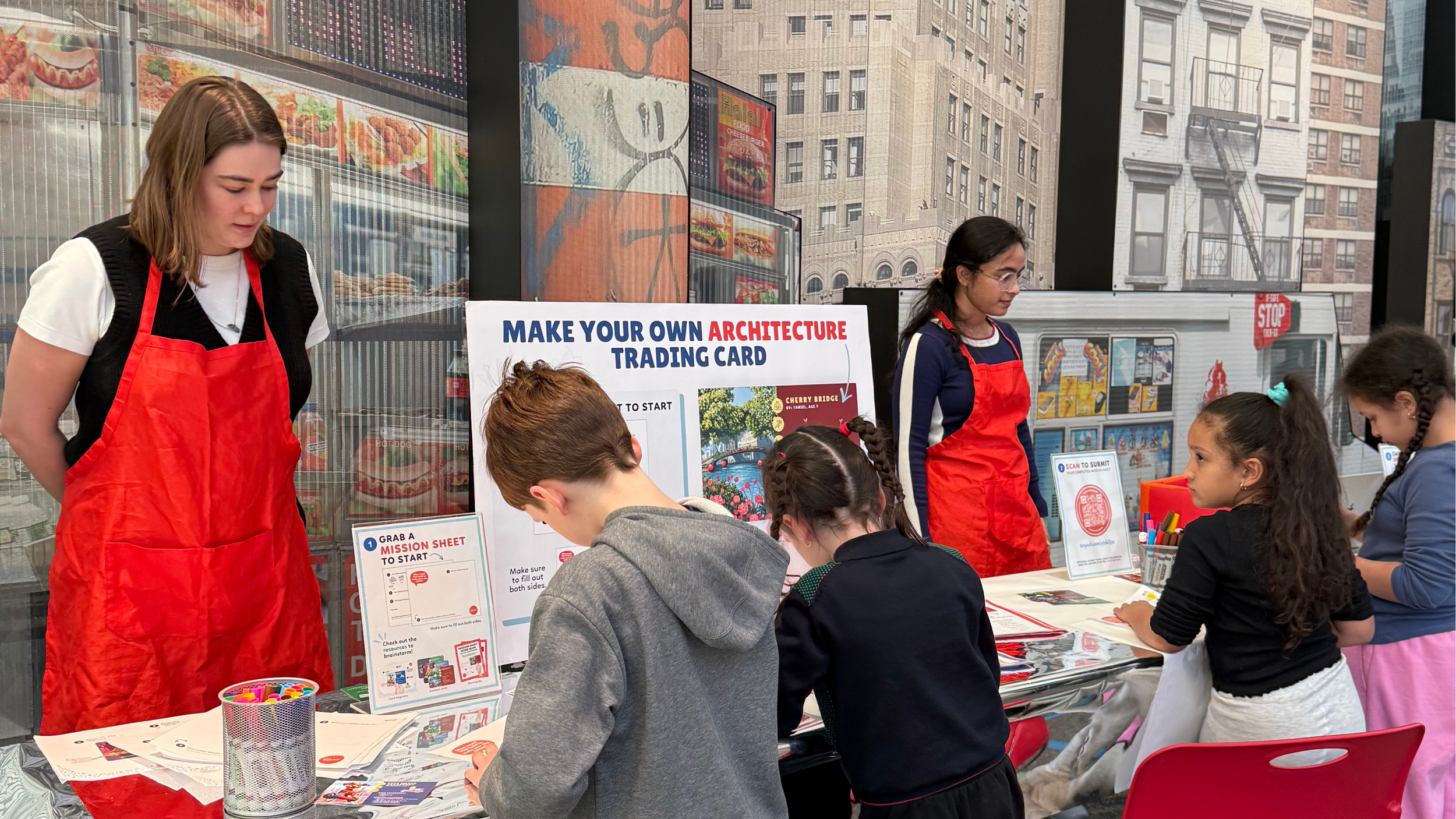
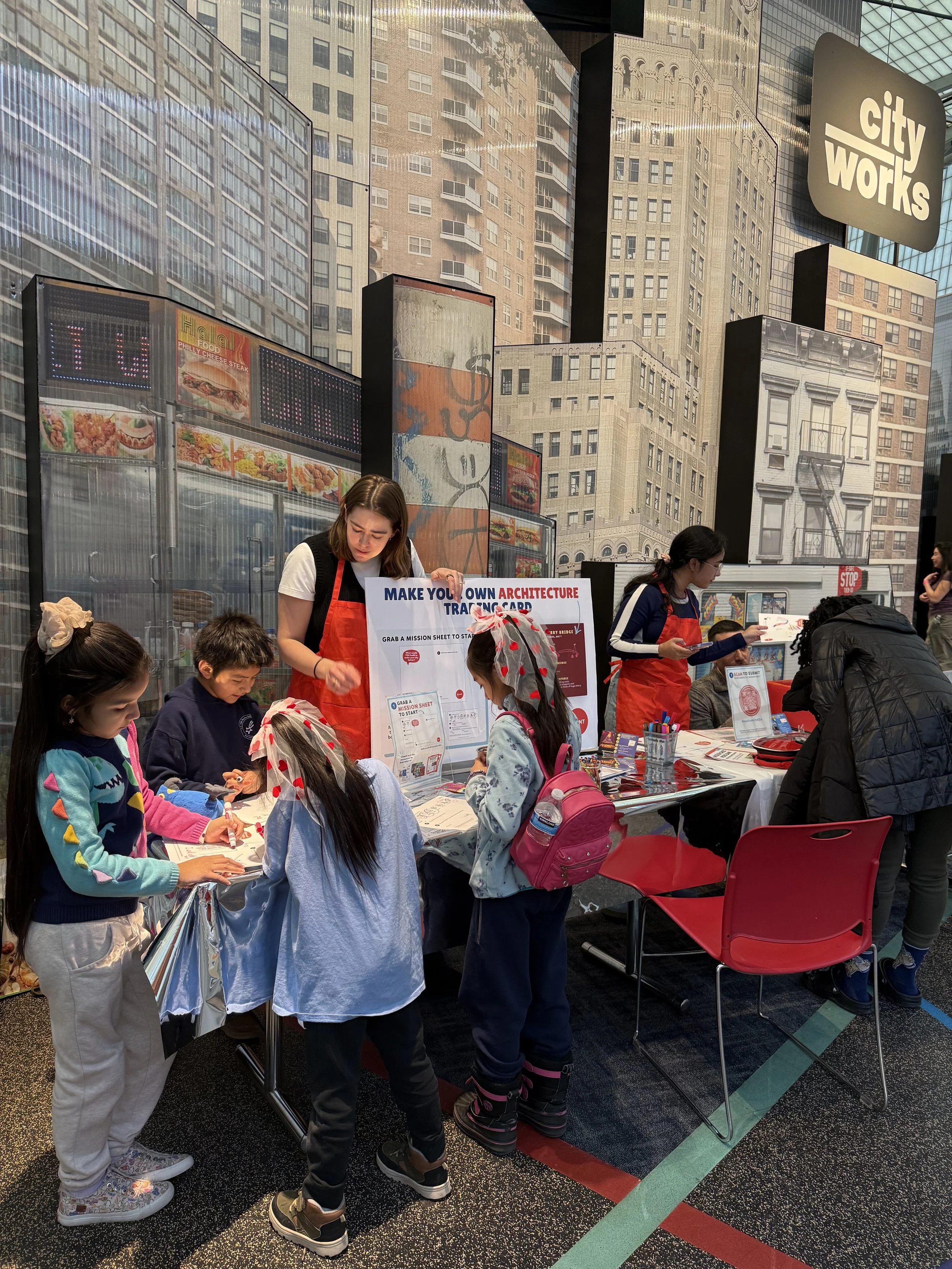
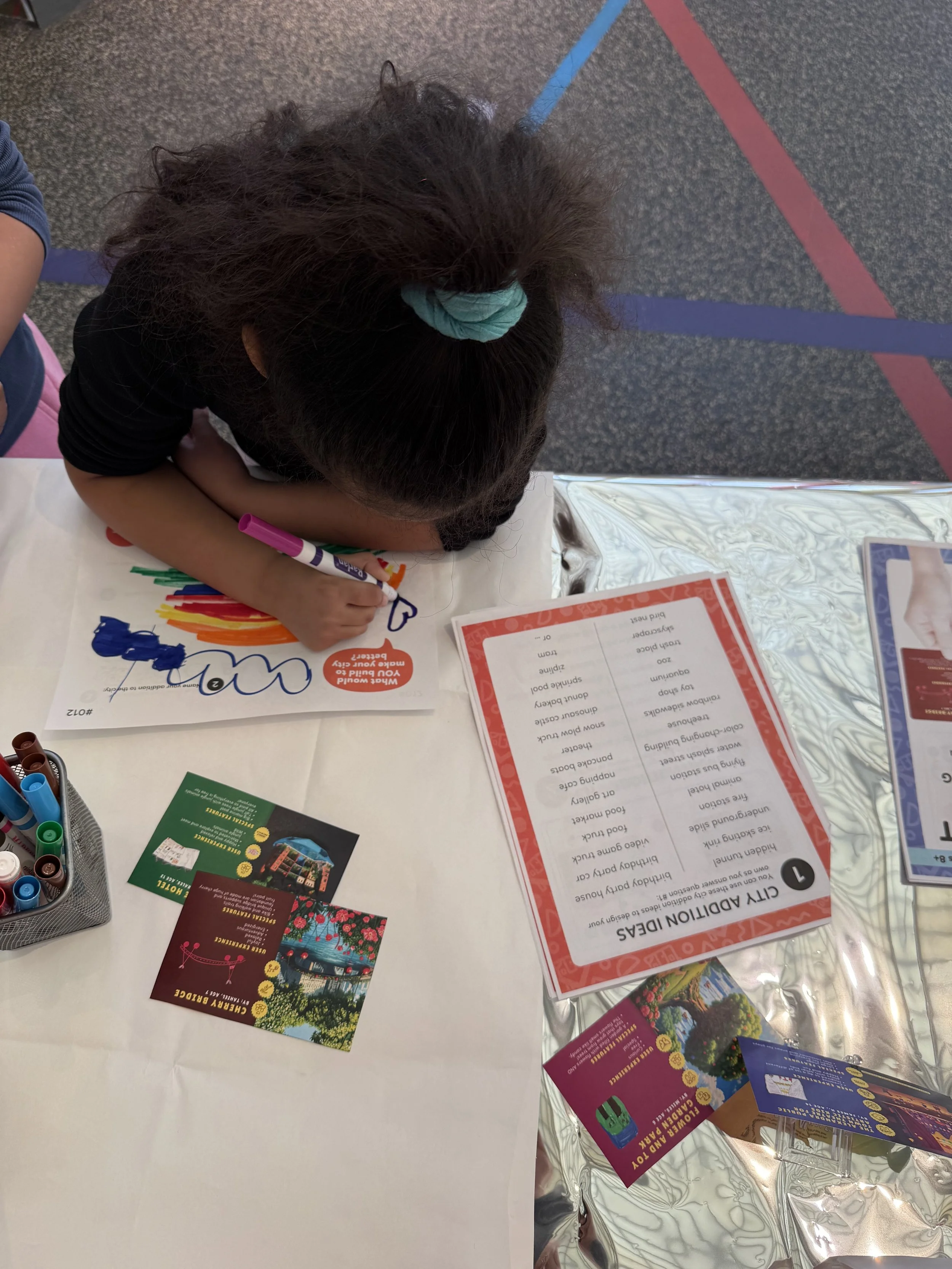
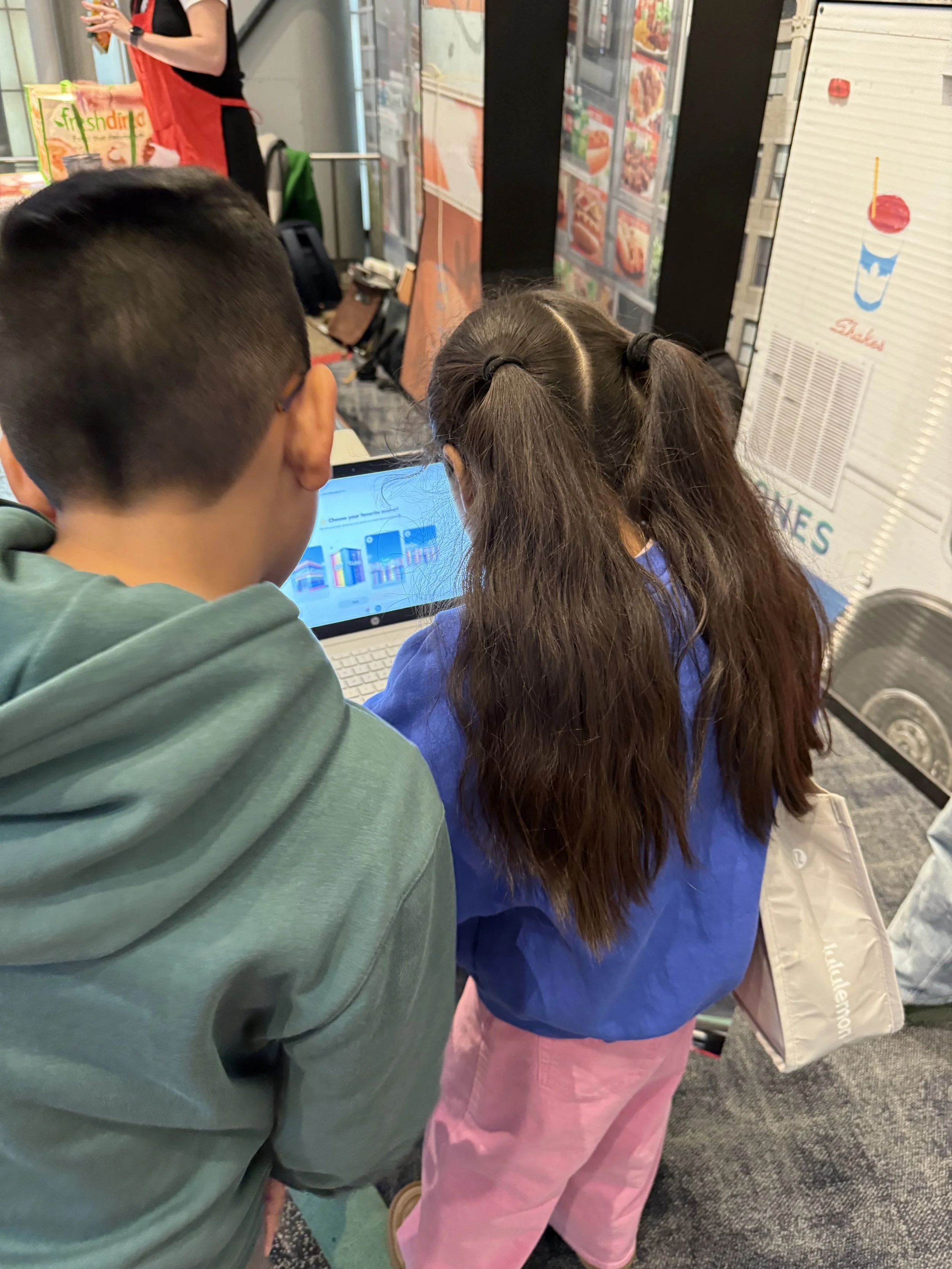
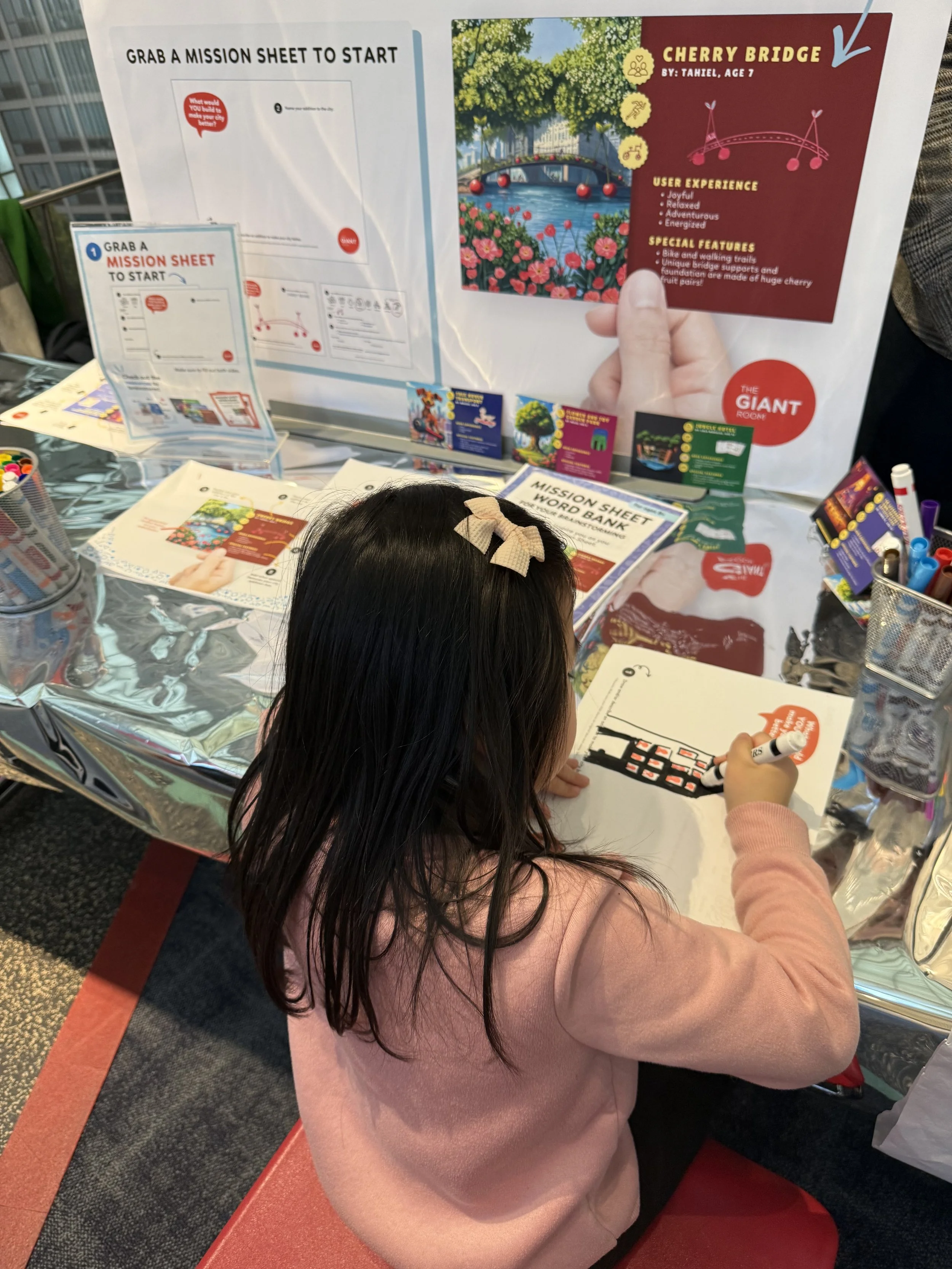
At a GIANT Trading Card–Making Station at the New York Hall of Science, families designed “Dream City Additions” inspired by their visit to the CityWorks exhibit. Their ideas are captured in a one of a kind deck of collectible cards.
The Creative Mission
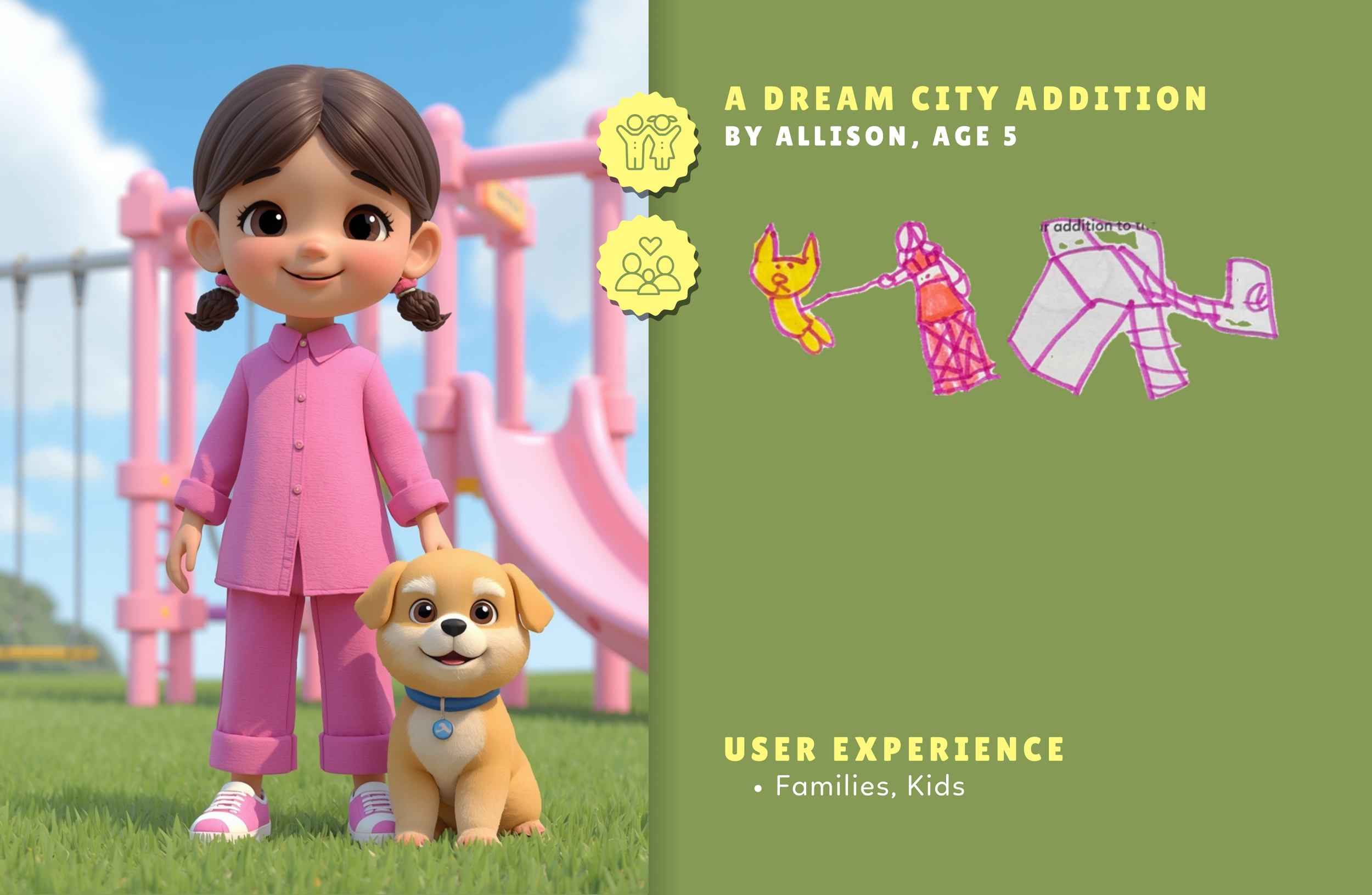
At the station, we asked kids, “What would you build to make your city better?” They responded to this creative mission by sketching their idea of a city addition, naming it, and then answering a set of questions that pushed their idea beyond “a cool idea” into an intentional design experience:
Who are you designing for?
How does your addition make them feel?
What special features in your design make them feel that way?
That thinking lens matters because cities aren’t a pile of separate objects: they’re connected systems. When young designers link people to feelings to design features, they’re practicing systems thinking and empathy at the same time: noticing who a place serves, how it changes daily life, and what design moves make that change real.
Design Patterns We Noticed in Kids’ City Addition Ideas
1) Play is part of the city infrastructure
Kids consistently treated joy as a legitimate civic outcome, and designed features that allow for play and playful interactions:
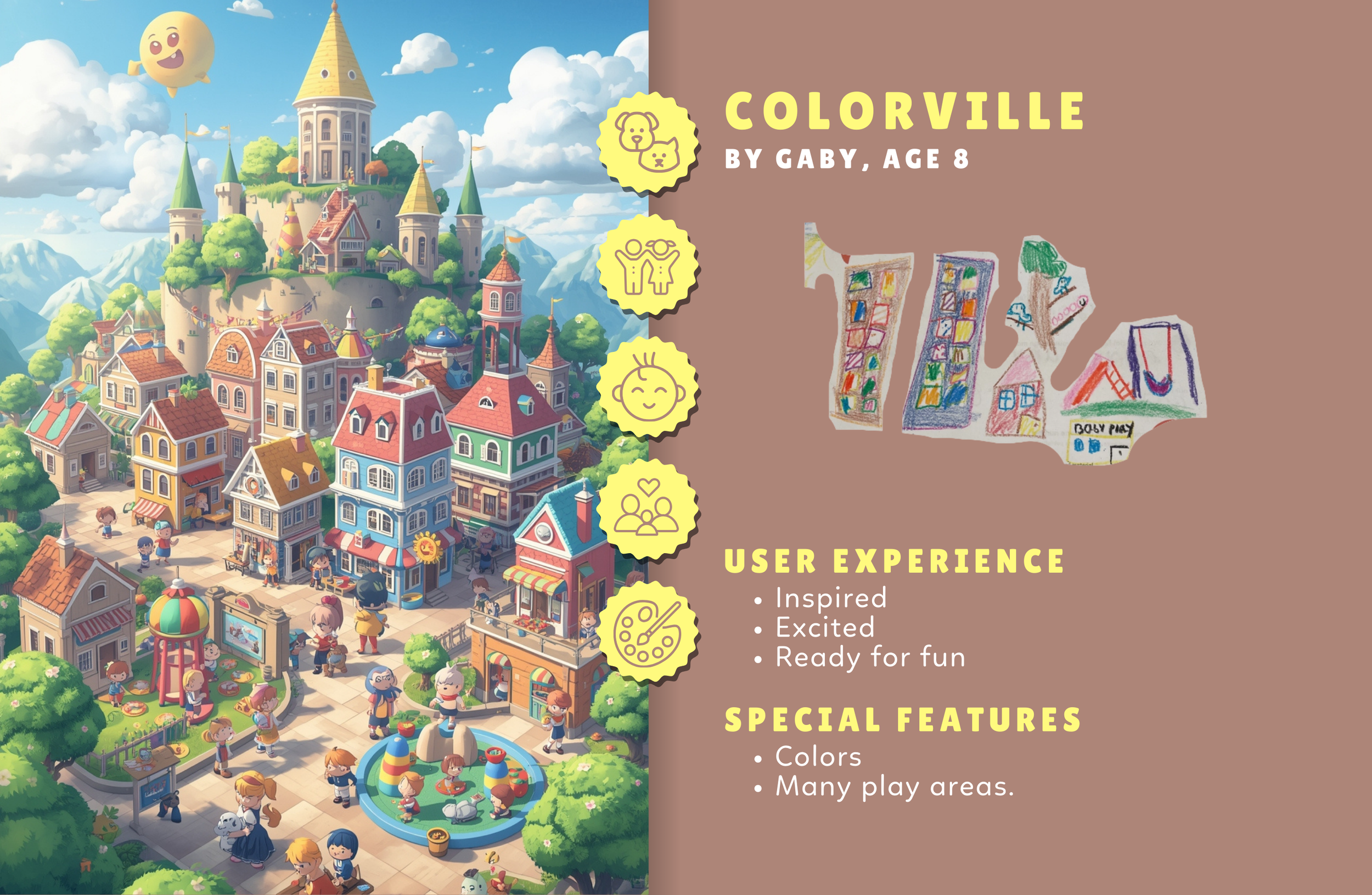
Colorville is designed to make people feel “inspired,” “excited,” and “ready for fun,” using “colors”and “many play areas.”
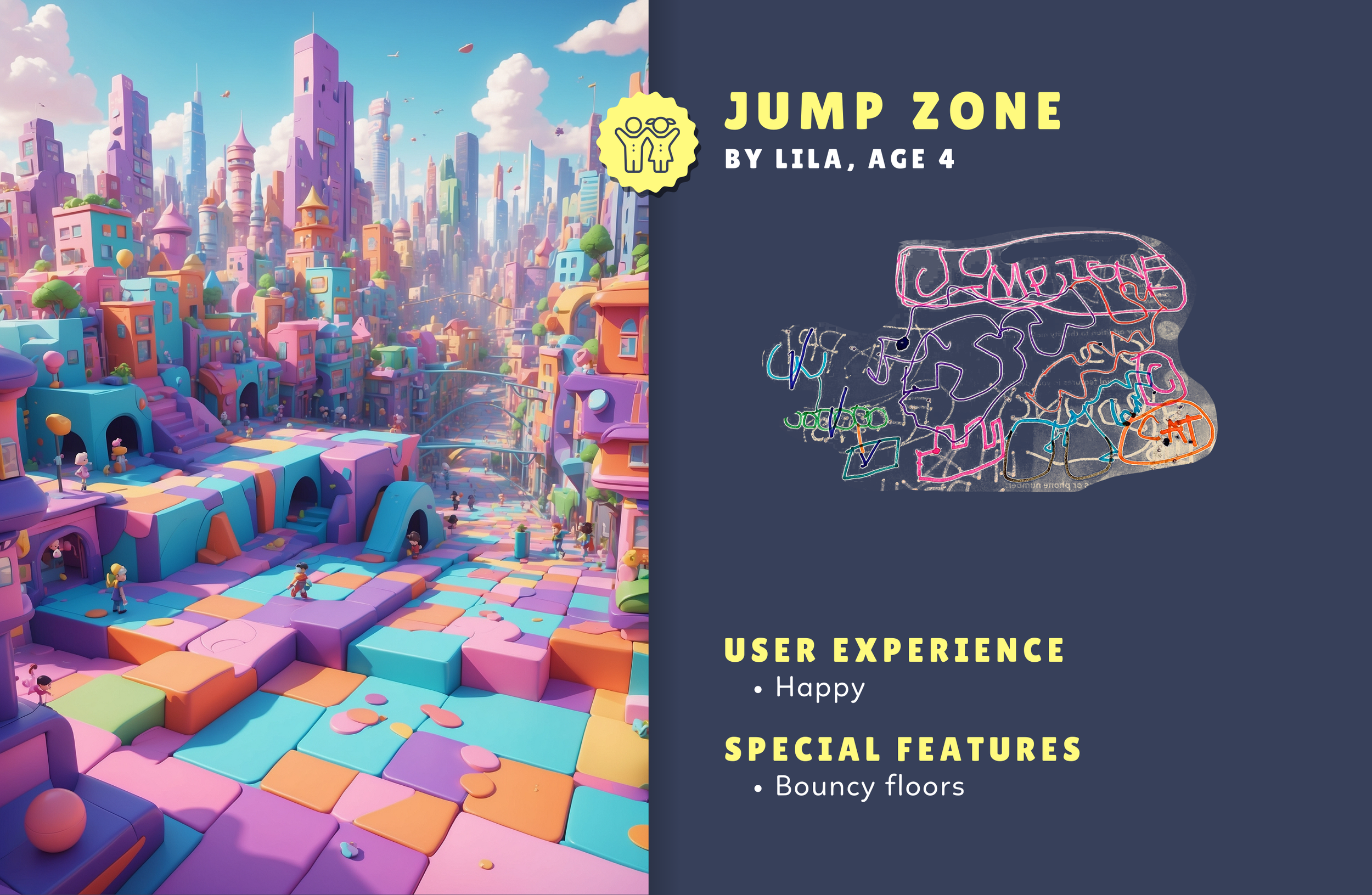
Jump Zone makes kids feel “happy” with “Bouncy floors.”
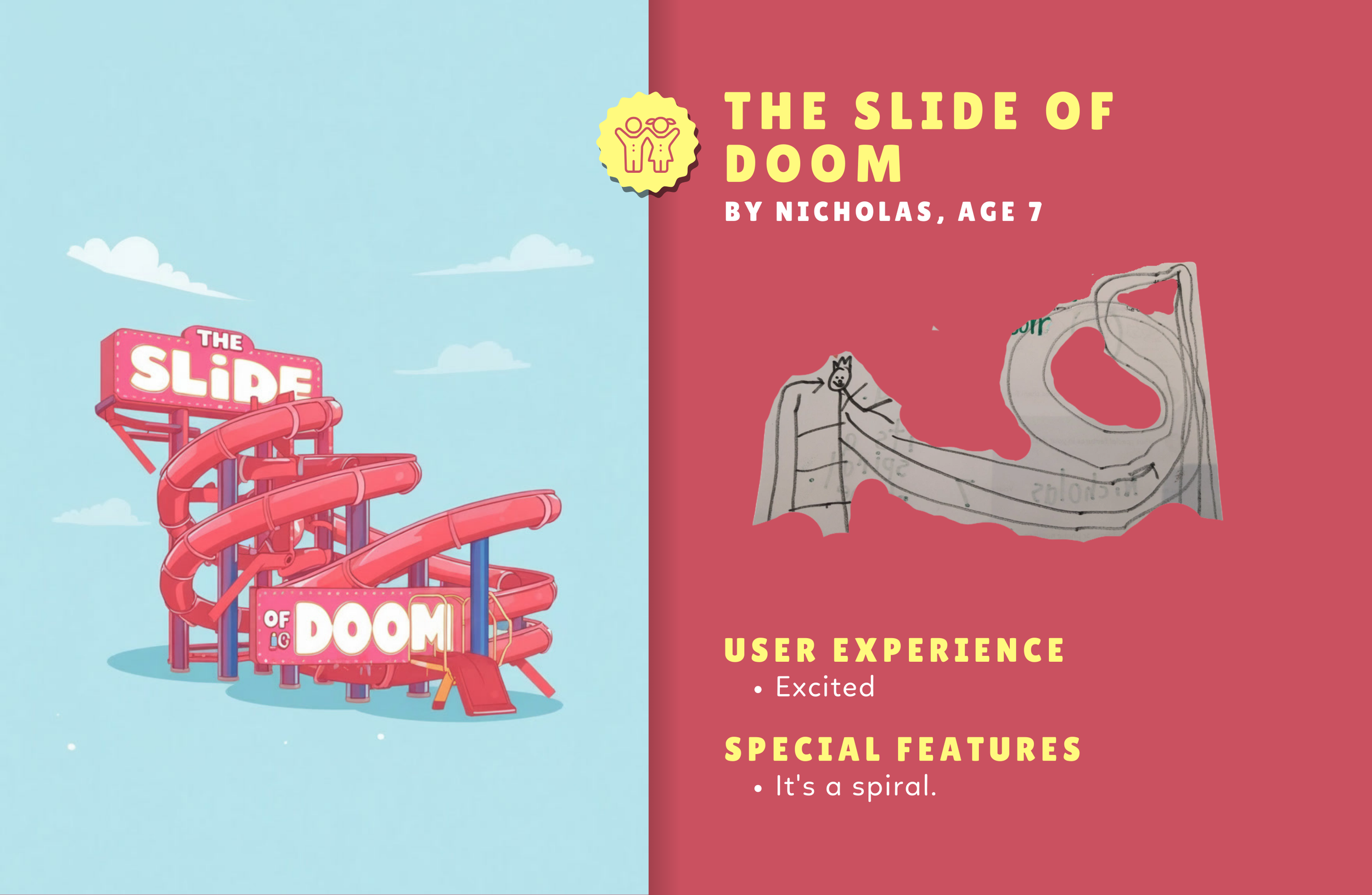
The Slide of Doom is designed for kids to help them feel “excited,” with spiral form.
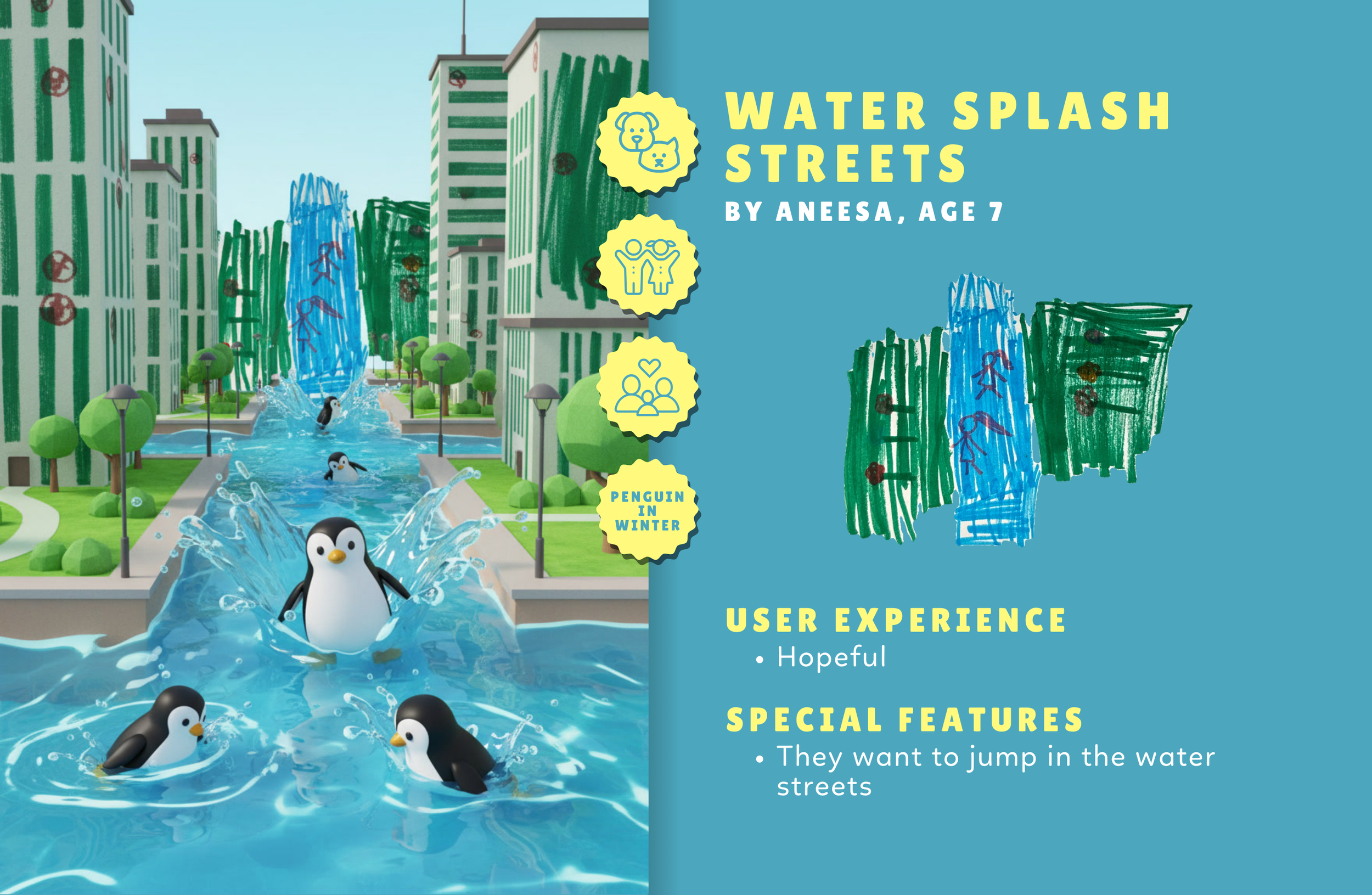
Water Splash Streets is a street design for people and animals, created to spark a feeling of hope. By turning part of the street into a playful place where they can jump into water, it transforms everyday infrastructure into a joyful shared experience.
Their designs show how simple joys and play can be woven into the city, helping everyone - children, adults, and animals - feel happier and more hopeful. Seeing “play” so central in kids’ ideas reminded us of the Playful Cities toolkit by Arup and the LEGO Foundation, with resources for reclaiming play in cities.
2) Nature and calm were designed as real services
A “better city,” in this deck, often means a city with built-in places to breathe, sit, and reset, especially outdoors:
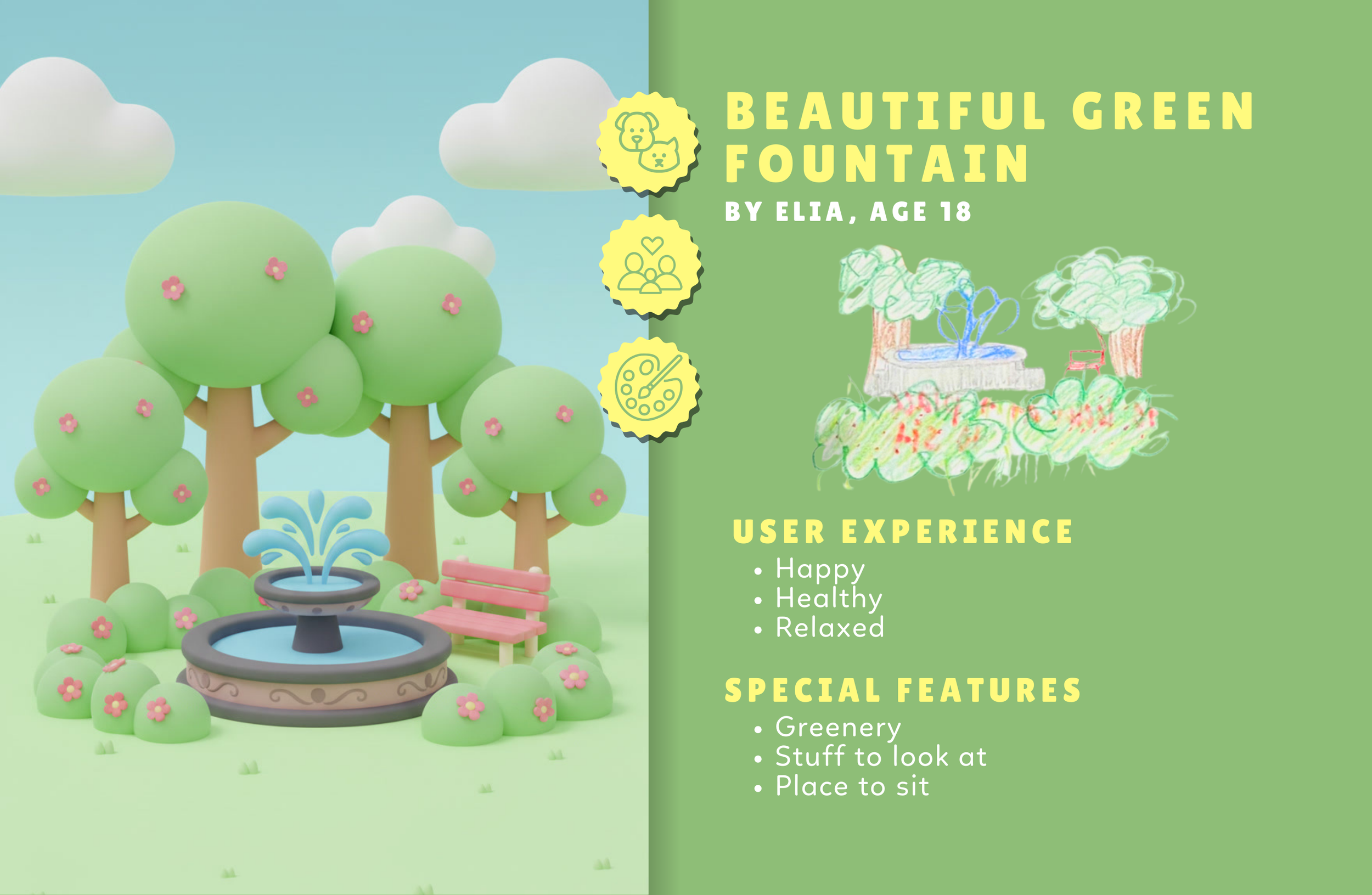
Beautiful Green Fountain is designed for families, animals, and artists to help them feel “happy,” “healthy,” and “relaxed,” with features that support lingering: “Greenery,” “Stuff to look at,” “Place to sit.”
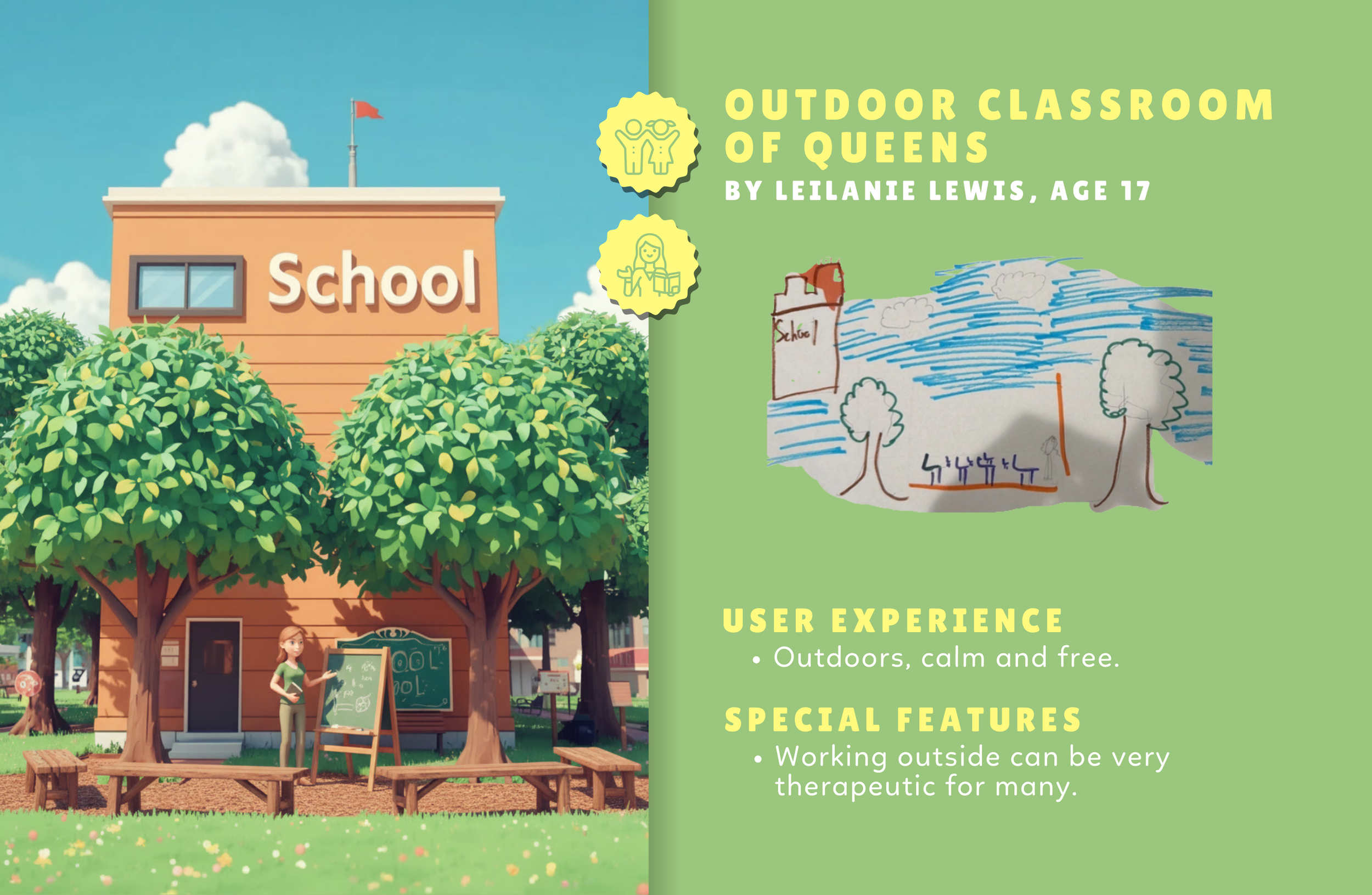
Outdoor Classroom of Queens is designed to help teachers and students feel “calm and free,” noting that “Working outside can be very therapeutic for many.”
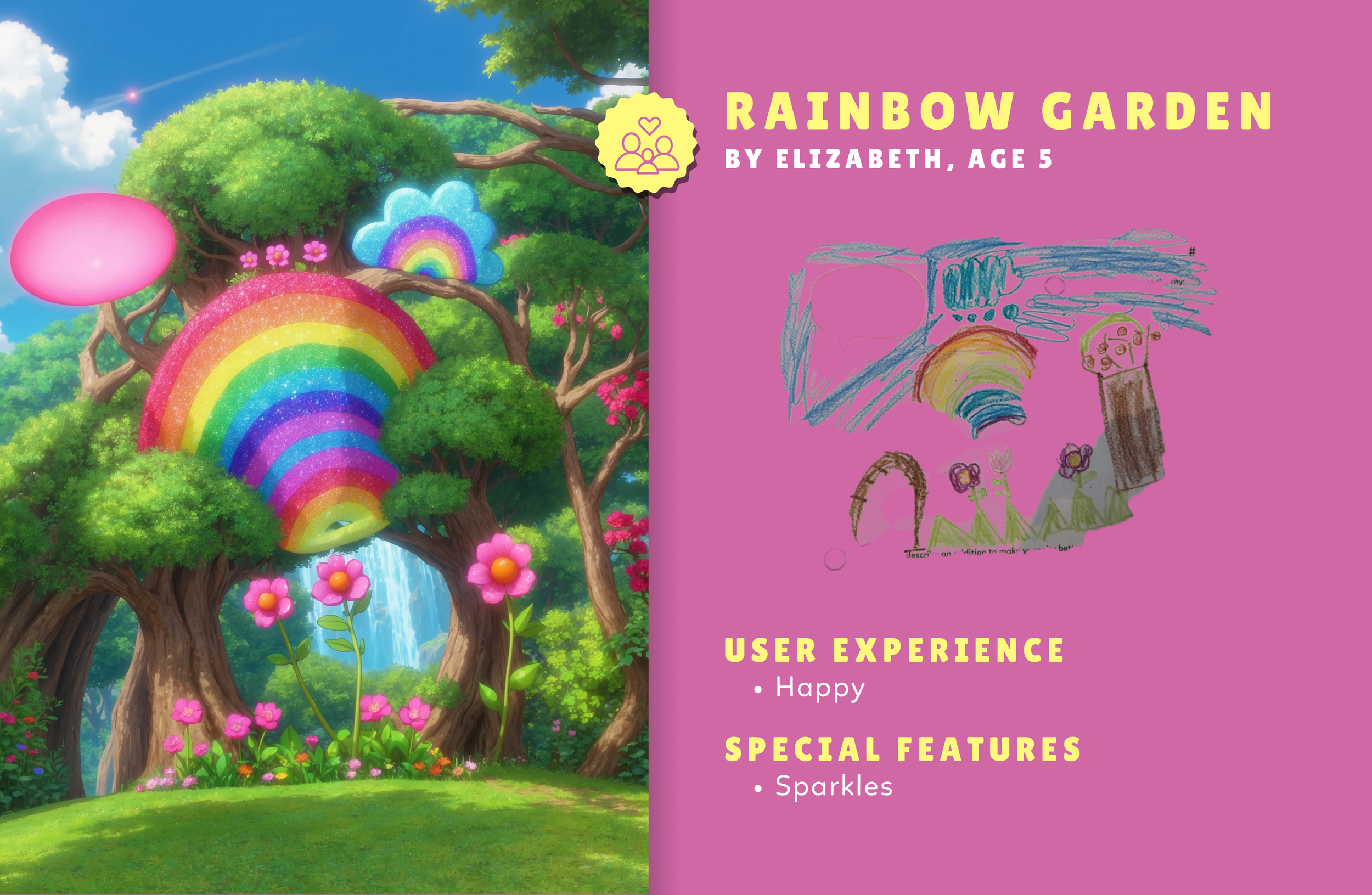
Rainbow Garden is for families to feel “happy” whenever they visit with lots of sparkles all around.
These ideas treat wellbeing as part of the city system: integrating nature into the city for a calmer happier life.
3) Transportation was at the top of the kid designers’ minds
Several kid participants designed connectors, aimed at making the city easier to navigate:
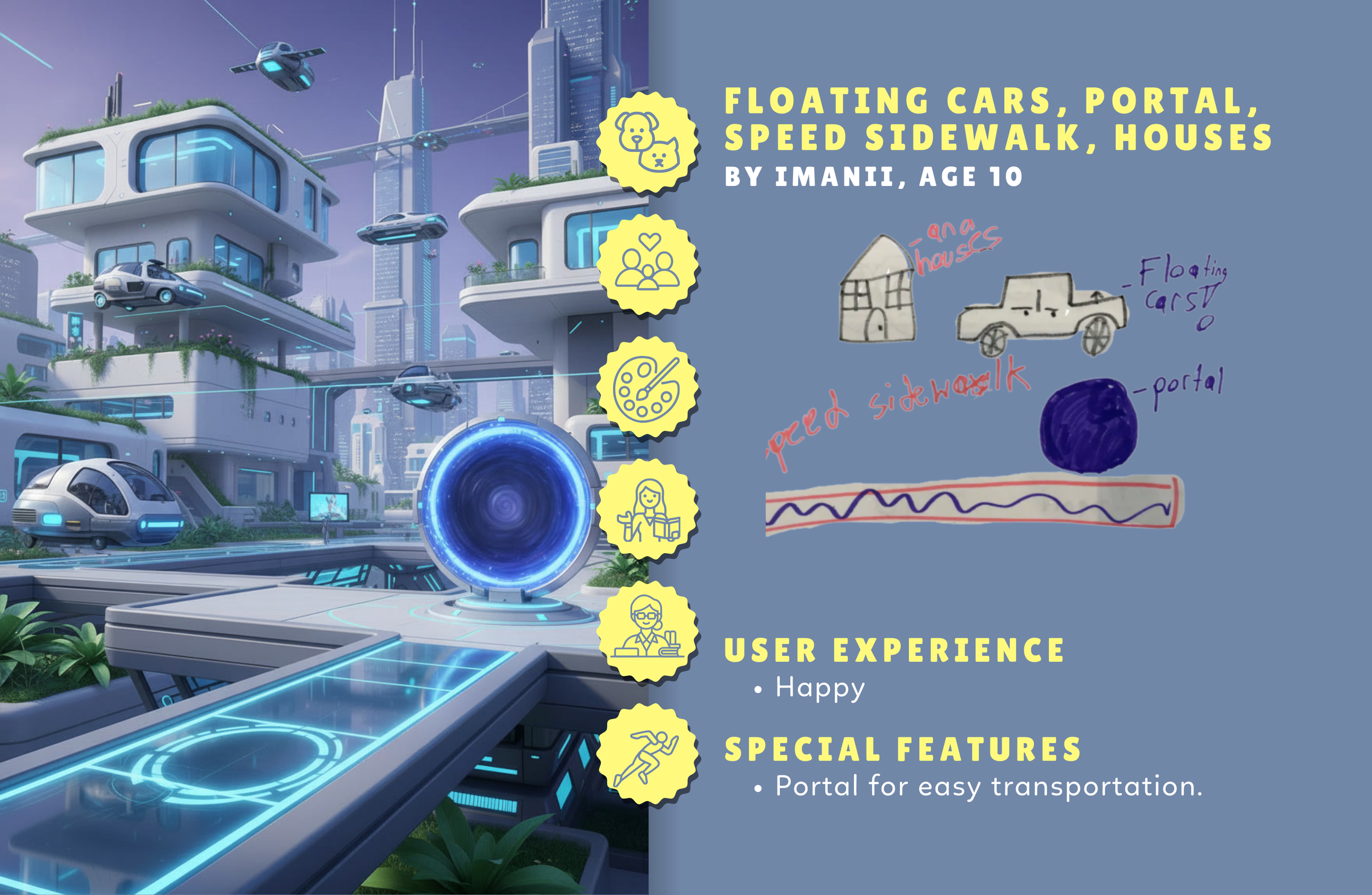
Floating Cars, Portal, Speed Sidewalk, Houses explicitly names its user experience: “Portal for easy transportation.”
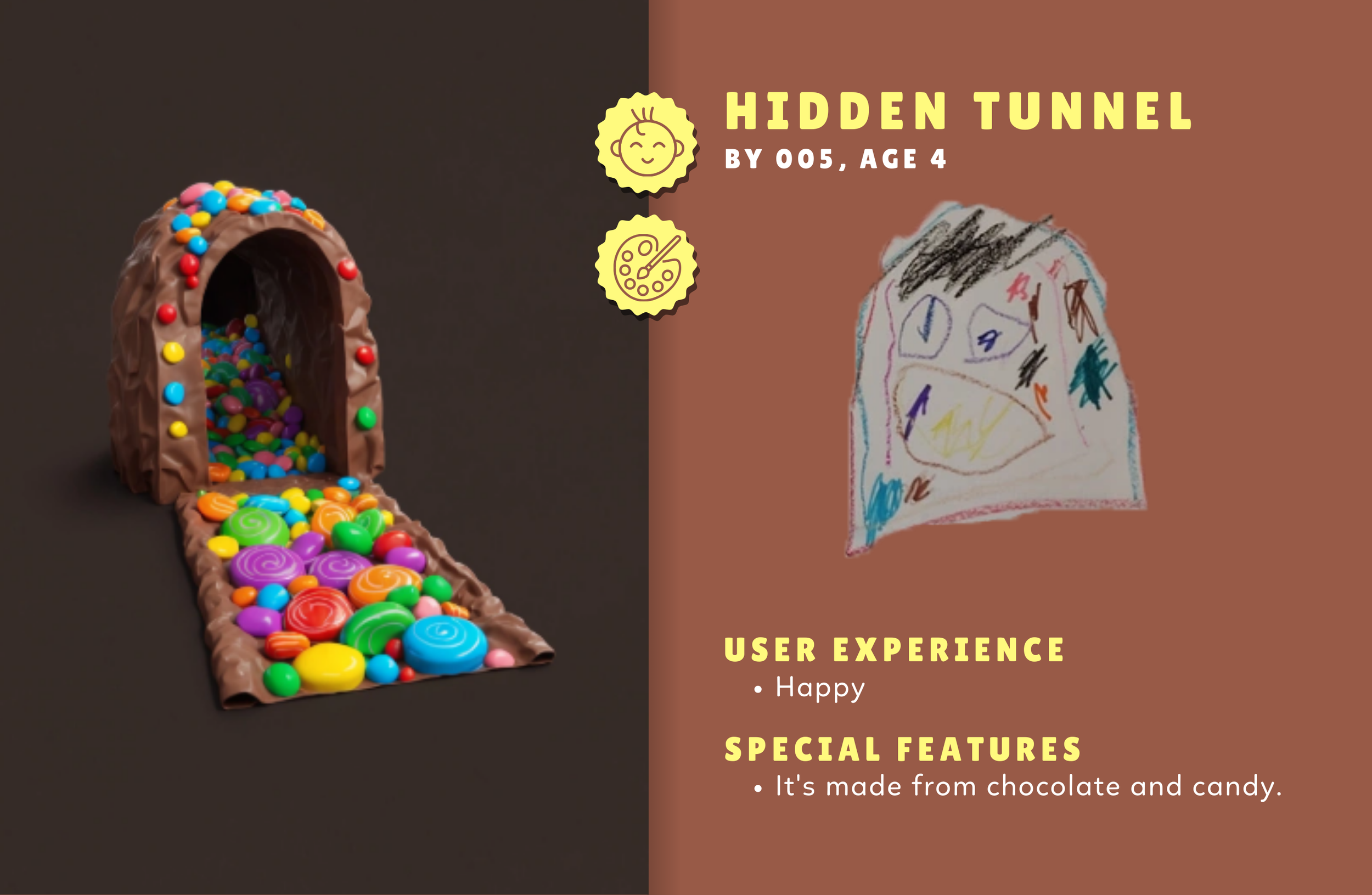
Hidden Tunnel is a transport idea with a playful material twist: “It’s made from chocolate and candy.”
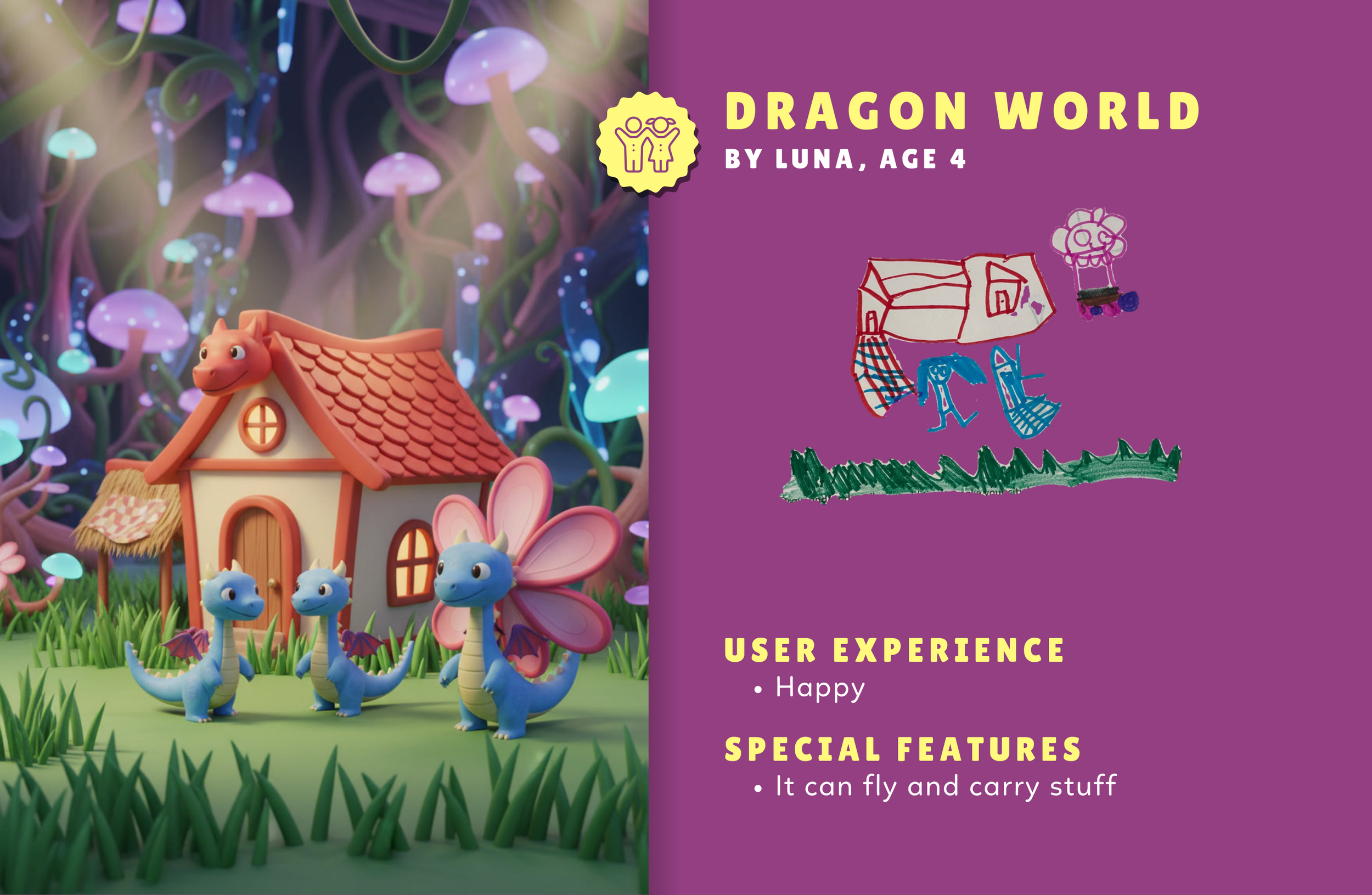
Dragon World looks like a house with a Dragon head. It can fly and carry stuff - designed for kids to make them feel happy.
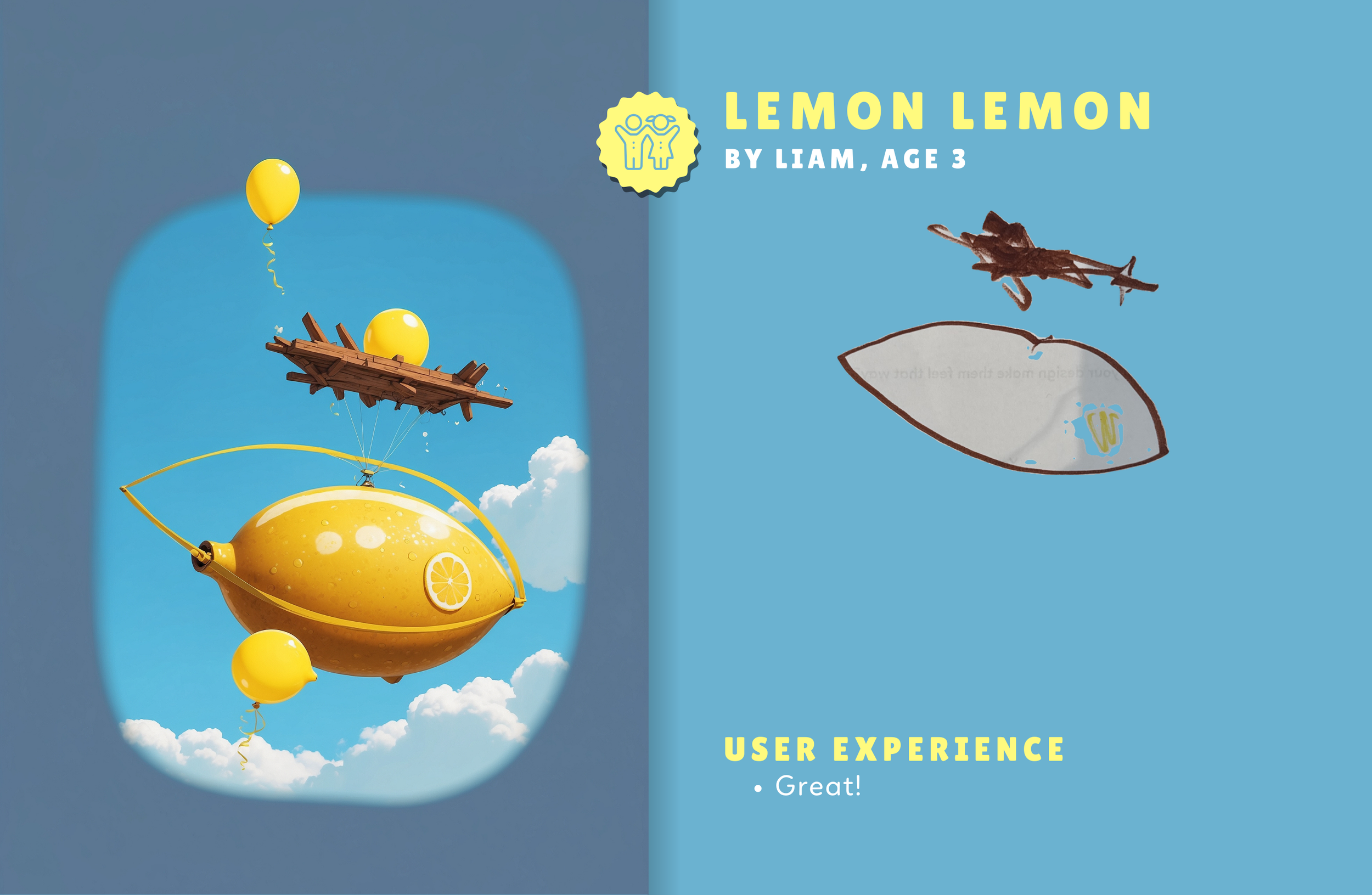
Lemon Lemon looks like a flying gadget for kids, with “great” user experience.
This is systems thinking in action: kids identified transportation and movement in the city as a city-wide problem and proposed features that change how the whole system flows.
4) Care and safety showed up as design requirements
A better city also meant a safer city, where the built environment protects, prepares, and takes care of living things:
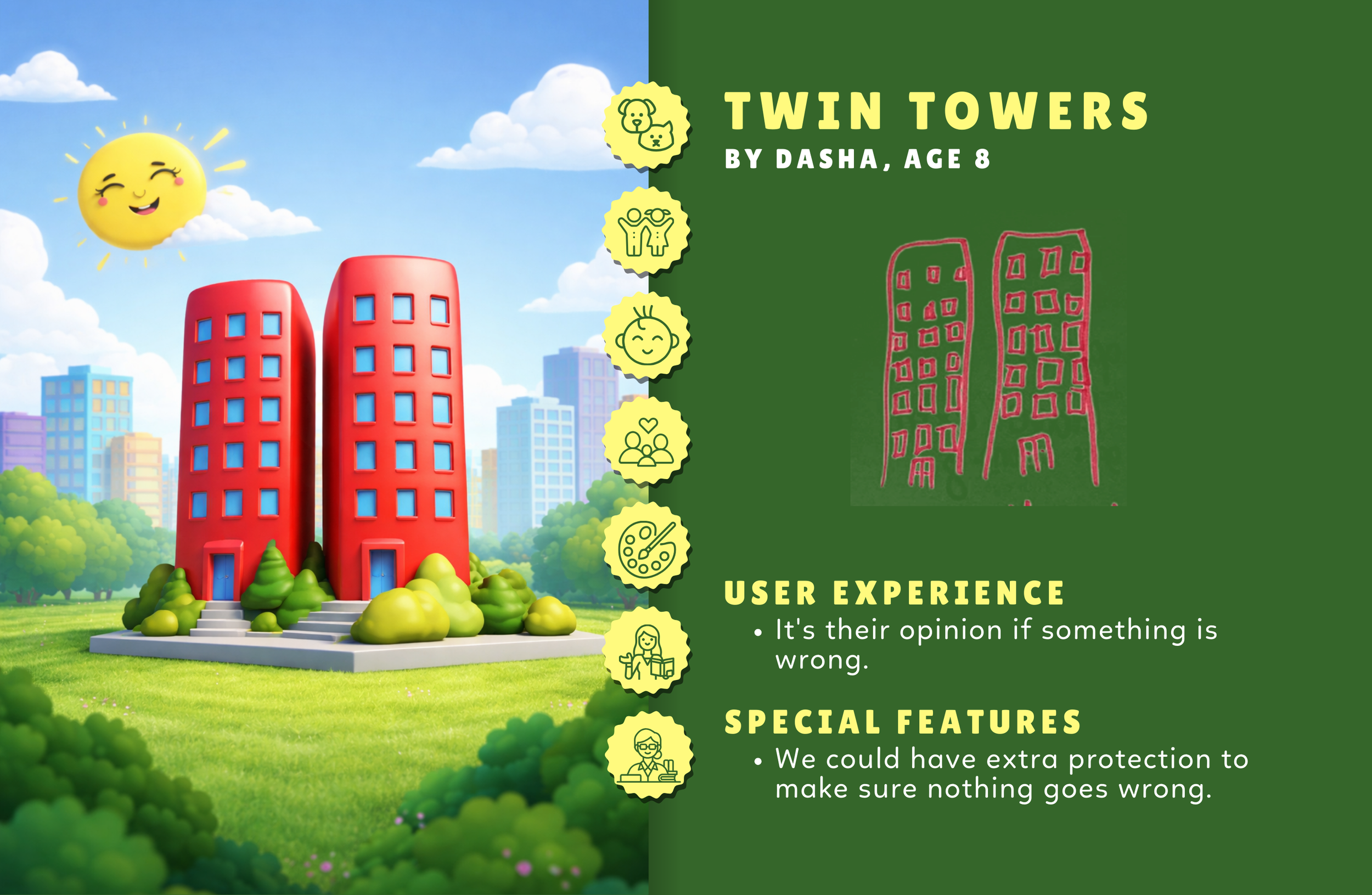
Twin Towers frames safety as the purpose: “We could have extra protection to make sure nothing goes wrong.”
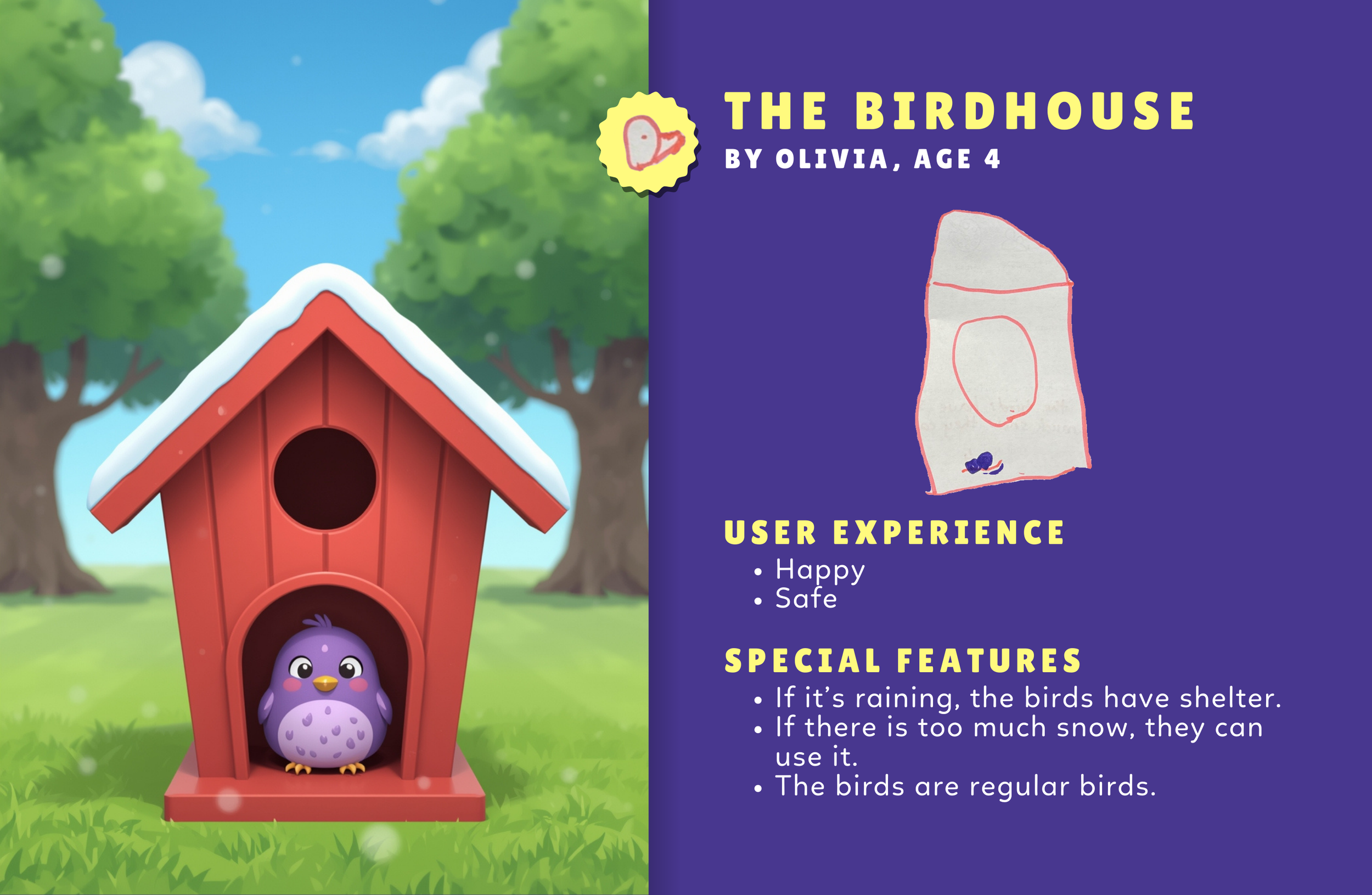
“The Birdhouse” designs for “Happy” and “Safe,” with a weather-ready feature set: birds have shelter if it’s raining, and support “if there is too much snow.”
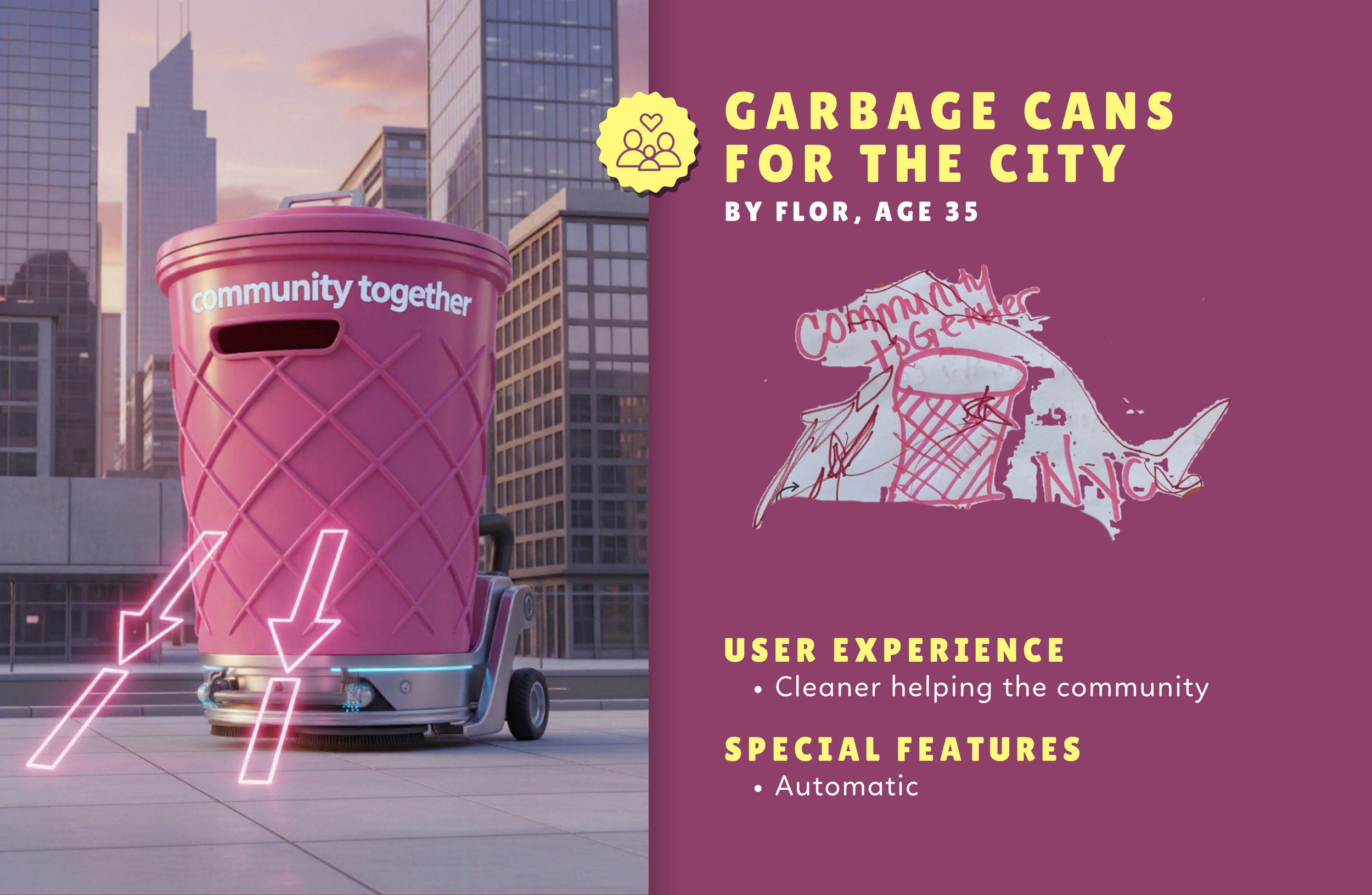
“Garbage Cans for the City” zooms out to a community-scale impact: “Cleaner helping the community,” with an “Automatic” feature.
These designers were thoughtful about civic needs (safety, shelter, cleanliness) and turned them into concrete, buildable features.
5) Cities were built for more-than-human neighbors, too
Many additions expanded the definition of “community,” treating animals (real and imagined) as rightful city citizens:
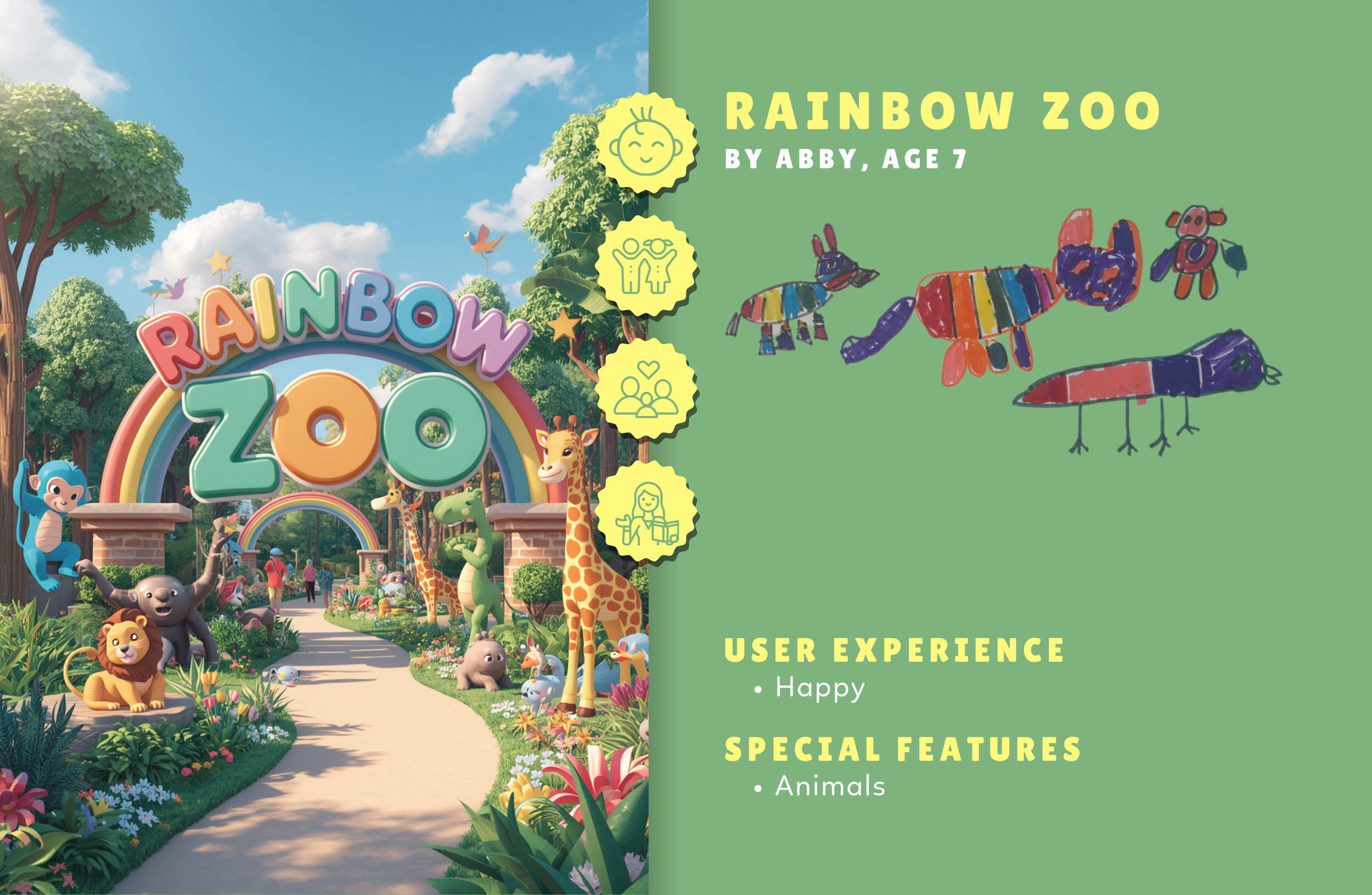
Rainbow Zoo centers “Animals” as the key feature for a “Happy” experience.
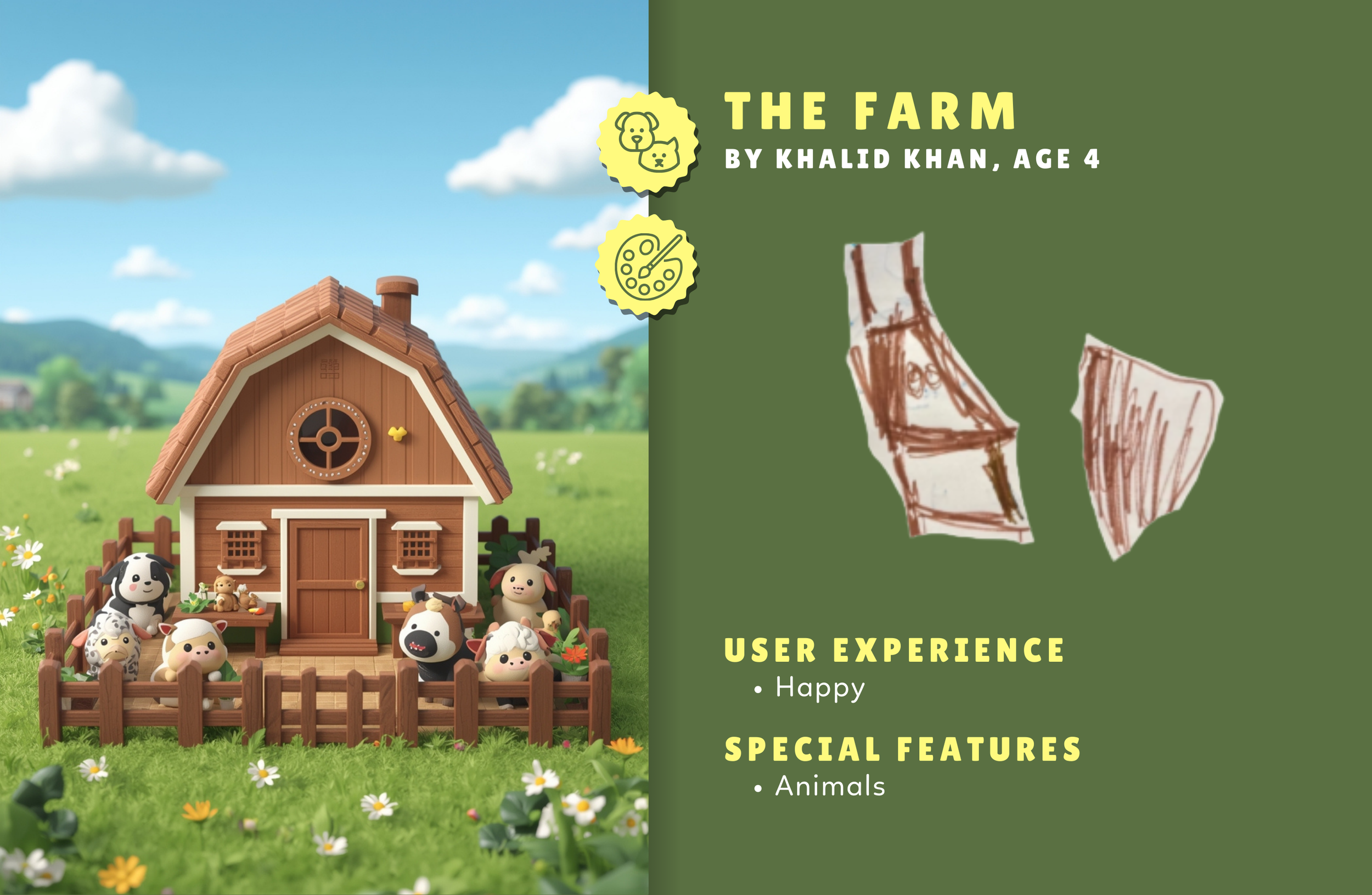
The Farm repeats that choice - “Happy,” with “Animals” as the core draw.
The Birdhouse is designed for our bird neighbors to help them feel safe.
Water Splash Streets is designed for humans and animals - including “penguins in winter” so that they can jump together in water to feel hopeful.
Designers practiced thinking about who a city is for, and answered: not just humans.
6) Kids were curious about natural disasters and the hidden secrets of the city
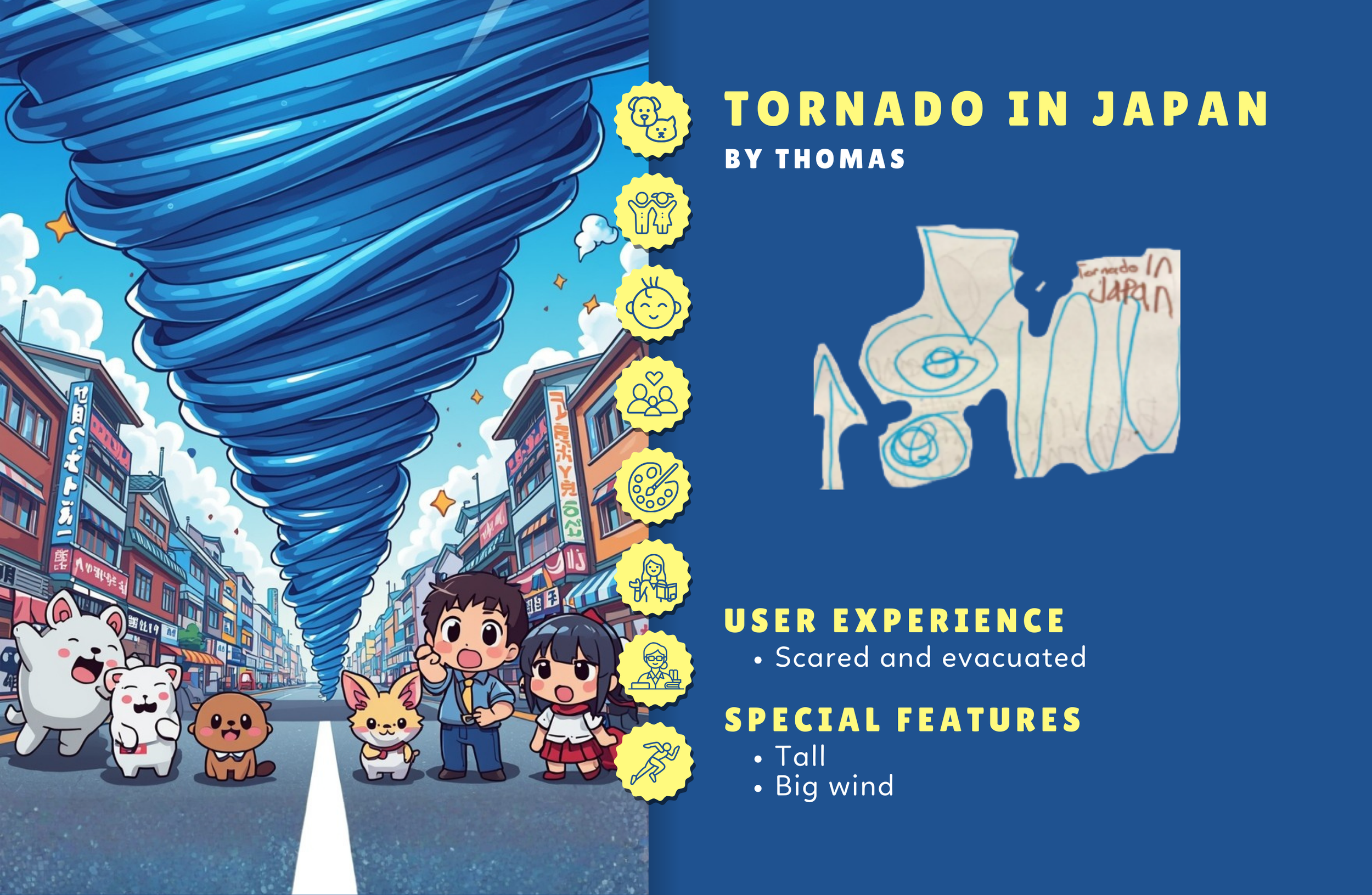
Thomas designed “Tornado in Japan” with tall, big winds that affected everyone in the city, making them feel “scared” and “evacuated”.
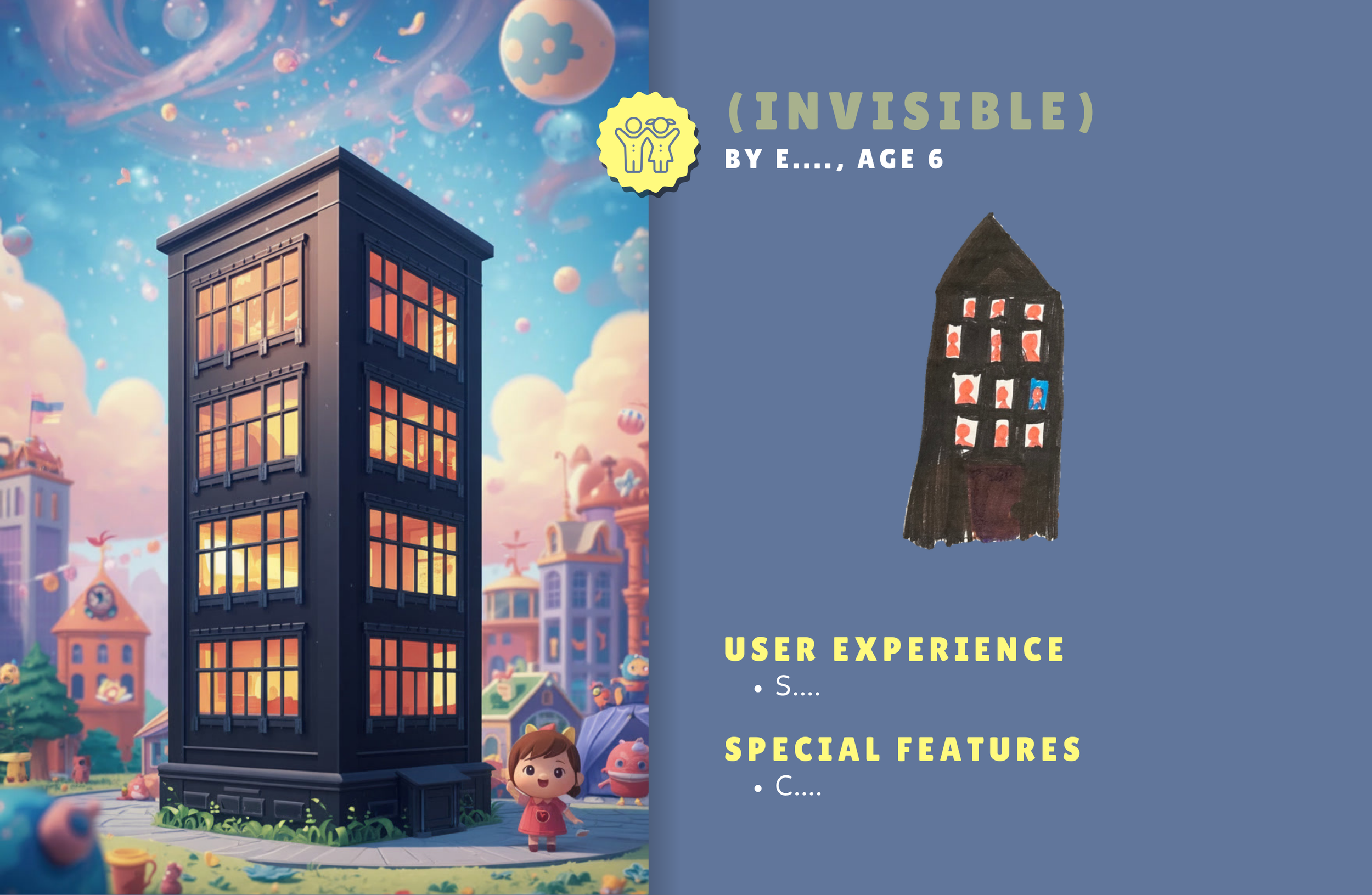
We also had an “Invisible” building with “secret” user experience and “c….” features.
A 4 year old designer, imagined a “Hidden Tunnel” made out of chocolate and candy, designed for little kids and artists!
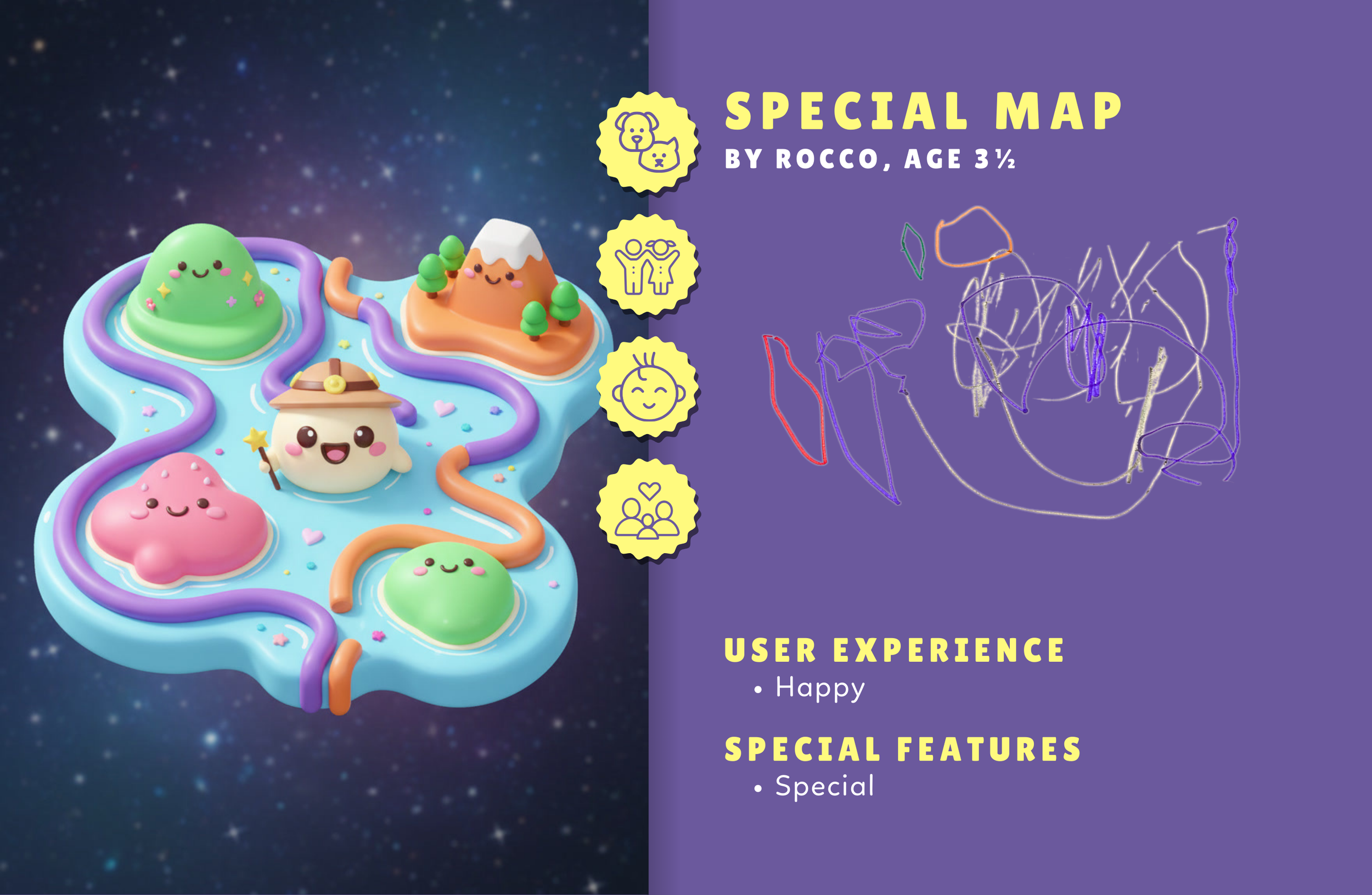
Rocco designed a “Special Map” of the city highlighting “special” features of the city.
Kids’ curiosity about the hidden, secret areas of our city highlights the imaginative ways they engage with its many layers - and suggests how city planners might add small sparks of joy and wonder for people to discover.
7) Kids crave a colorful city
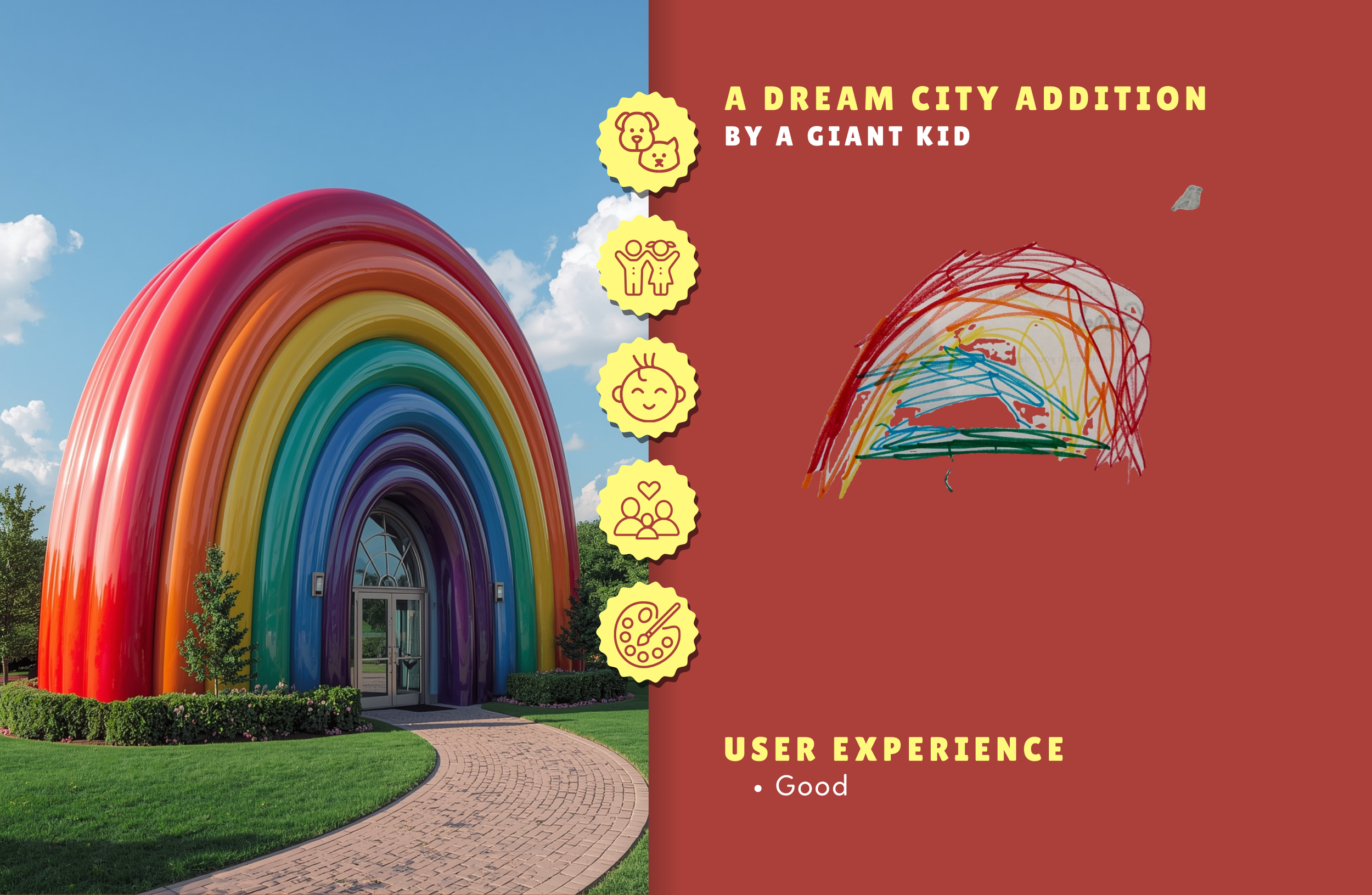
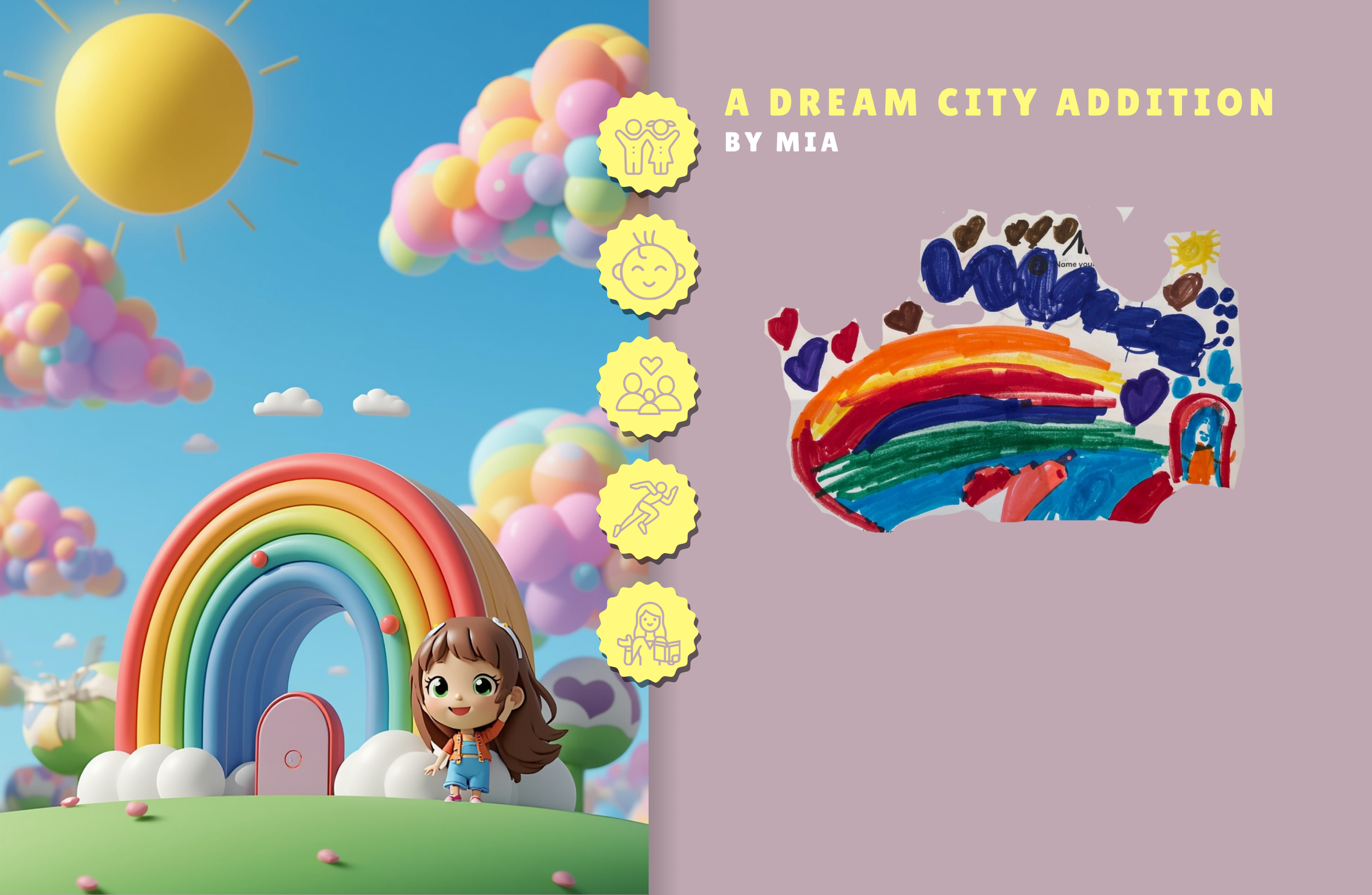
Many kid participants added colors and rainbows to their designs - some even highlighted “colors” as the special feature of their city additions:
Colorville is a city addition with many play areas that are colorful
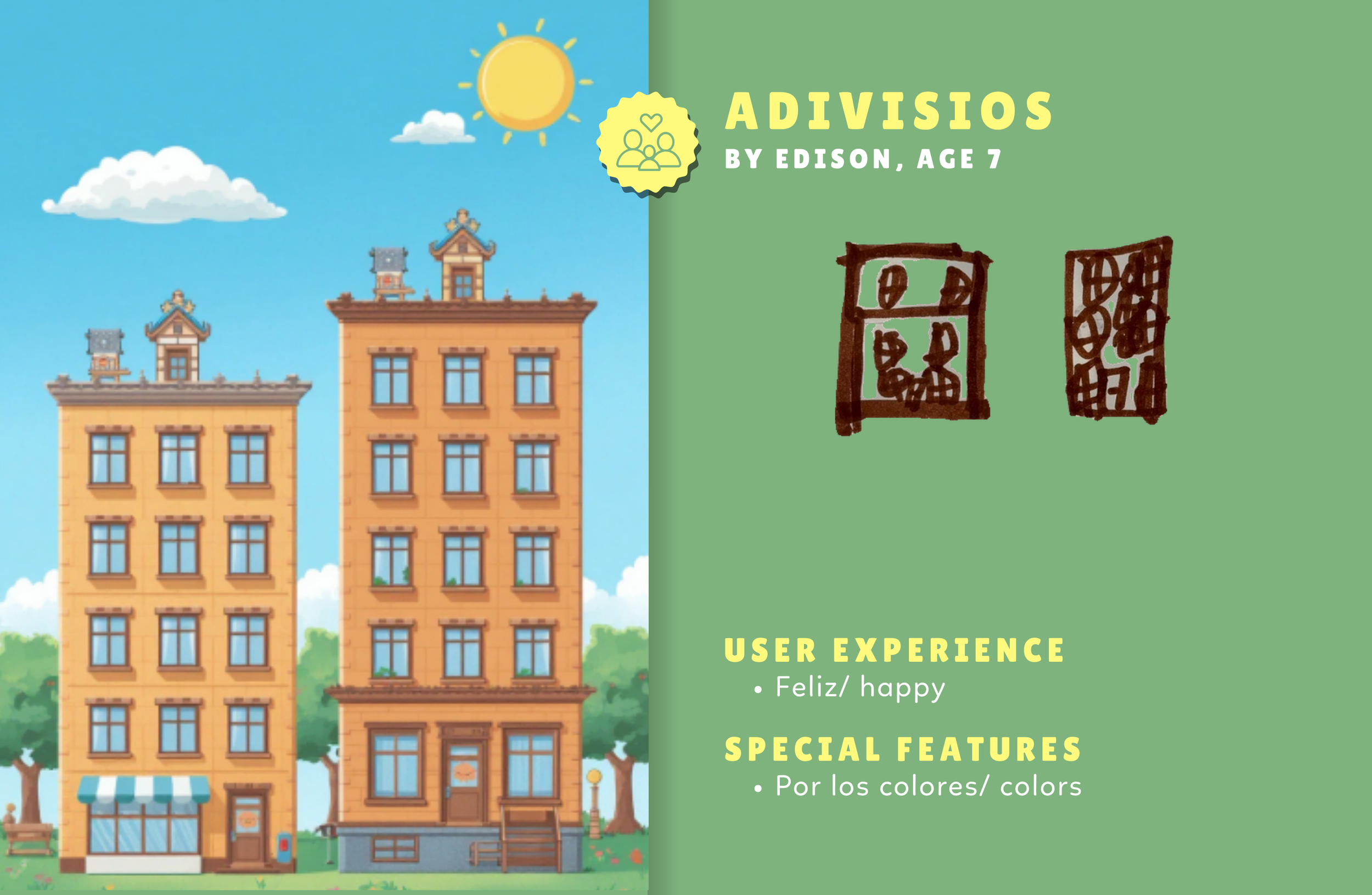
Adivisios are buildings with “colors” as their special feature, designed to make families feel “happy”.
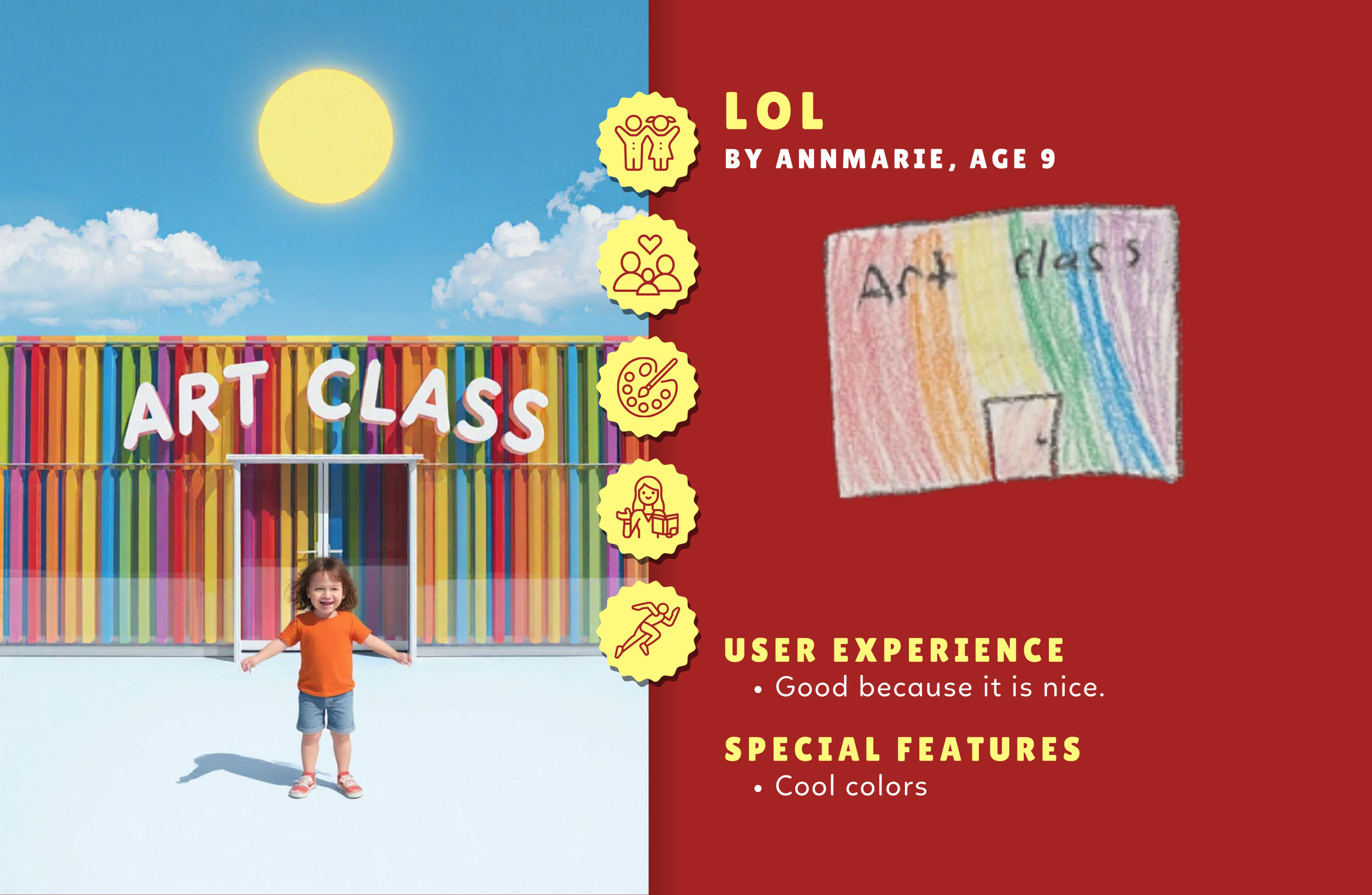
Annmarie designed an Art Class with “cool colors” as its special feature.
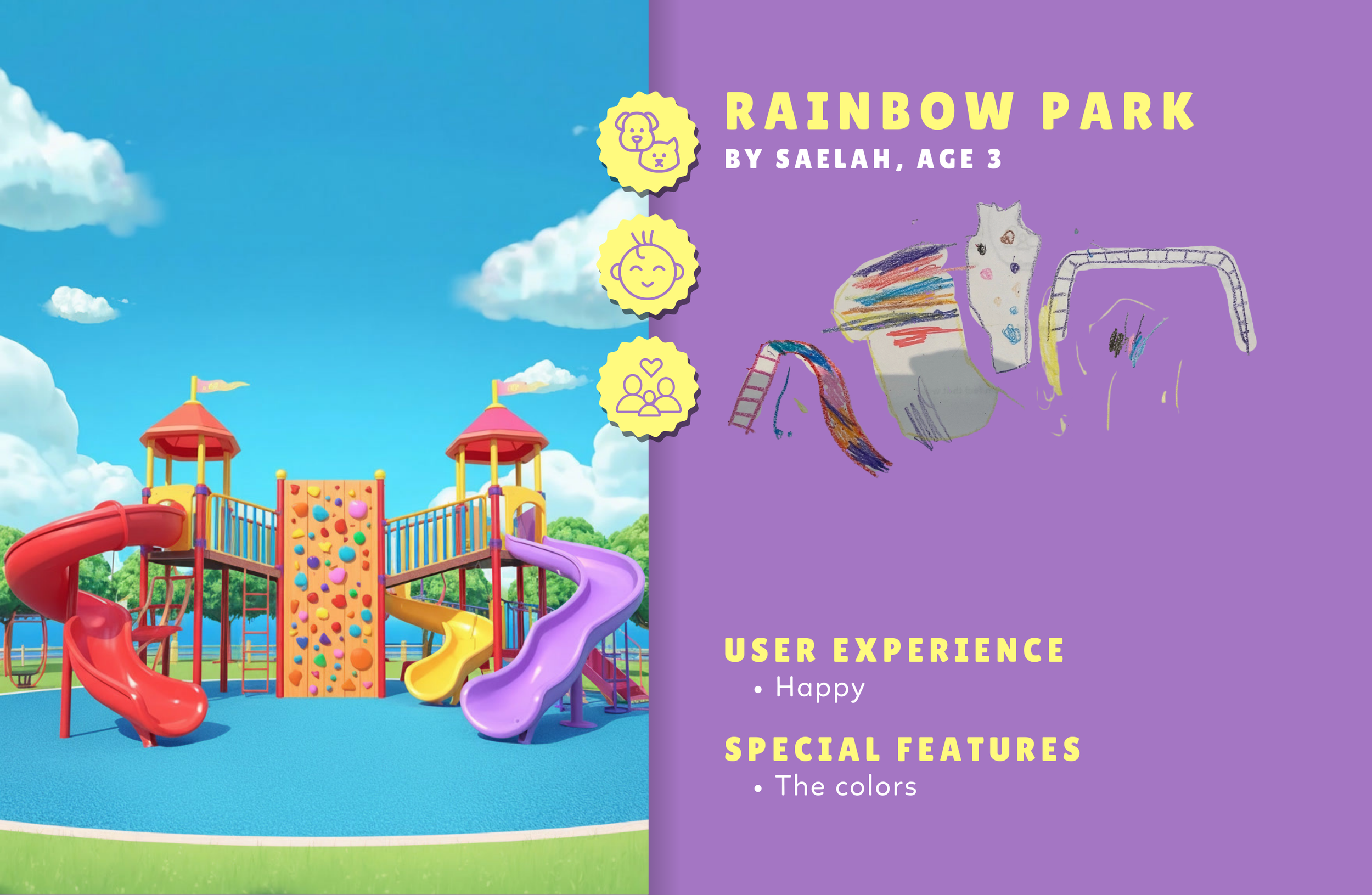
Saleh designed a Rainbow Park with “colors” as its special feature. The Park is designed for kids, families, and their pets to help them feel happy.
Their colorful designs remind us of the Superkilen public space in the Nørrebro neighborhood of Copenhagen - with its bright red, pink, and orange paving. Superkilen is project by Bjarke Ingels Group (BIG), Superflex, and Topotek 1 who used local community input as part of their design process.
From CityWorks to Dream City: What Kids Practiced
At GIANT, we believe the process of ideation and making matters more than the final product. As educators, we design learning experiences that guide kids through that process by asking carefully crafted, probing questions and offering “word banks” they can draw from.
Dream City station was designed to help kids practice,
Systems thinking: treating transportation, parks, sanitation, and safety as connected parts of city life
Design Thinking and empathy: designing “for” someone, choosing target feelings, and mapping them to design features
Clarity and naming: giving an idea an identity that communicates purpose fast
Imaginative prototyping: using bold materials and forms (spiral slides, candy tunnels, flying dragons) to explore what a city could be
Having the process in mind, helps us have deeper and more meaningful conversations with kid designers about the ideas they shared - instead “evaluating” their ideas as “cool, fun, cute,” we can talk to them about how might the design choices they made make others feel, how their designs change city life for the better, and how they can more clearly communicate about their GIANT ideas.
Try This at Home (or at the library/museum/classroom)
Want to bring a similar design thinking exercise to your own kitchen table, classroom, or children’s room at the library?
Design Mission: Design one new addition that would make your city (or neighborhood) better.
Give your designer a blank page and ask:
What’s the name of your city addition?
Who is it for? (Be specific: toddlers, commuters, grandparents, birds, night-shift workers, etc.)
How should people feel when they use it?
What special features create those feelings?
Let the kid lead. The goal isn’t a “right answer”. It’s about noticing how their ideas connect people, feelings, and systems.
Keep Exploring
Bring GIANT Remix to Your Community
If you’re a teacher, librarian, or museum educator and you’re curious about what ideas youth in your community would share, we’d love to partner with you. Contact us to bring GIANT Remix to your community!
Read More About GIANT Kids’ Ideas: