Where’s My Microbe? Students Turn Germ Science Into a Search-and-Find Adventure
What happens when you invite kids to think like a microbiologist by “Discovering Their Own Hidden Microbes”…?
You get an entry point for science thinking: students observe, categorize, infer cause-and-effect, and communicate explanations - through a format that feels like play. The result is a deck of kid-designed Microbe ID Cards that makes the invisible world of microbes concrete, discussable, and memorable. Plus, search-and-find games on the back of the cards invite kids to spot their microbes hidden in germ hotspots, drawing attention to places that might be contaminated with harmful germs.
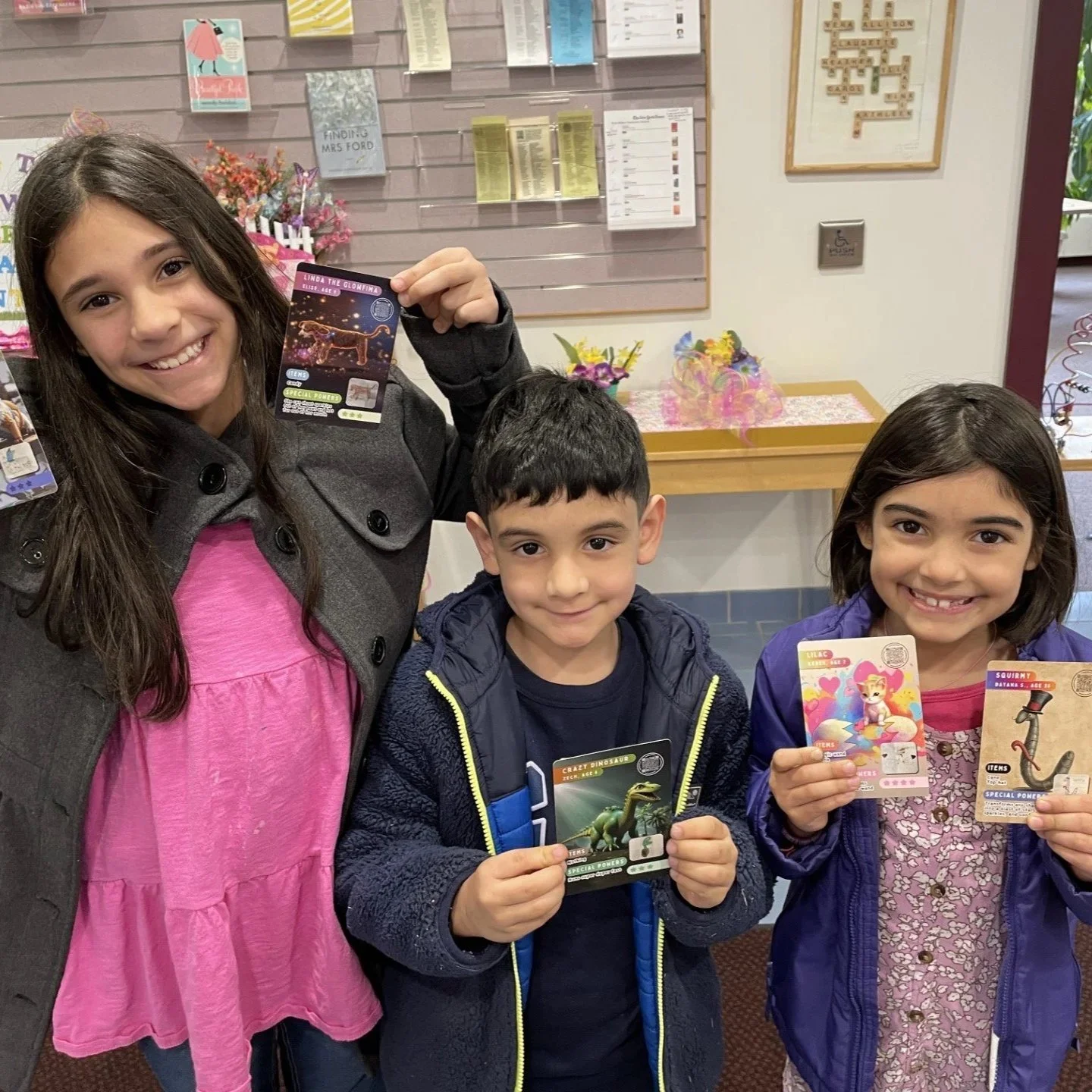
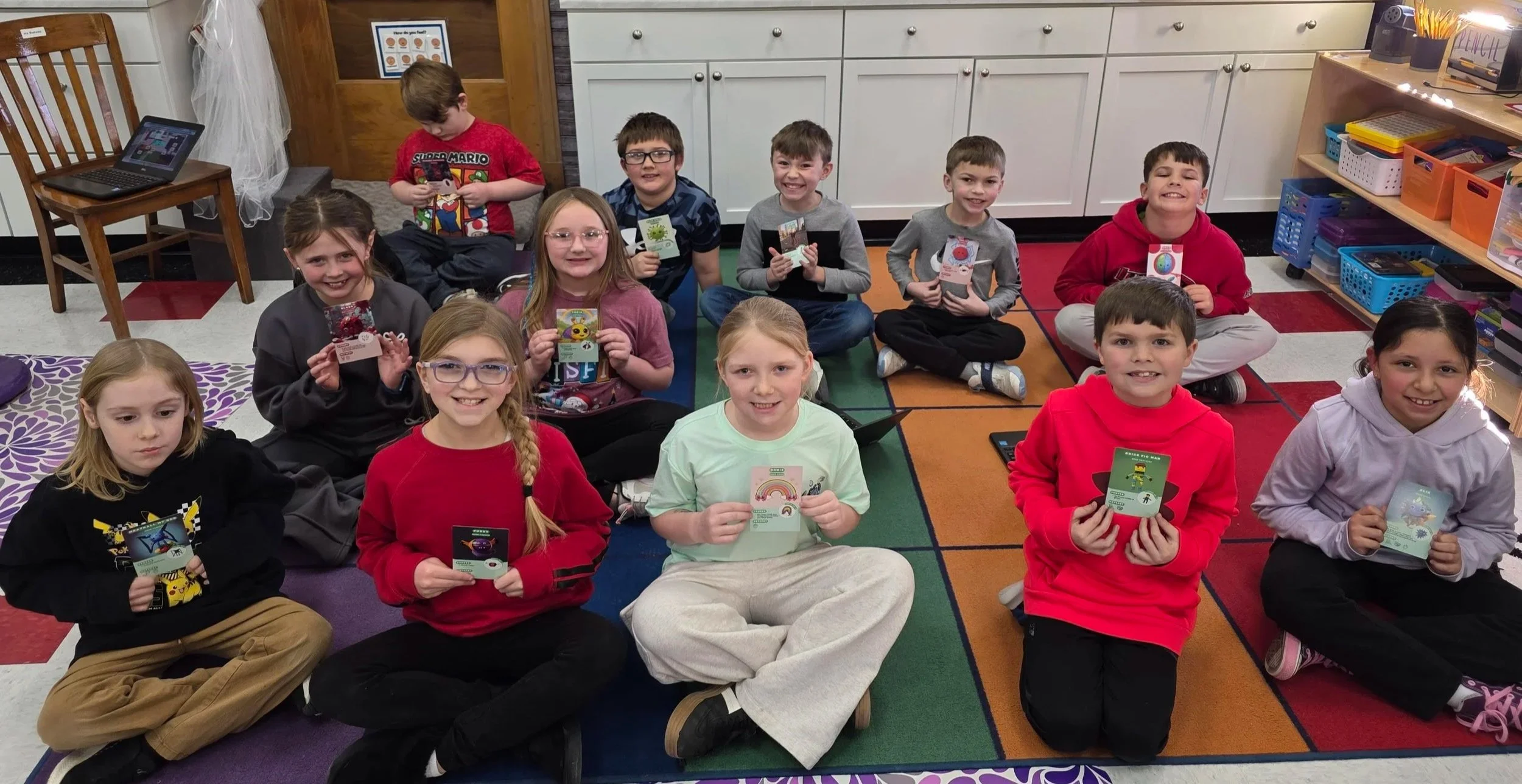
Introducing the GIANT Game Set: Search & Find Microbe Trading Cards—a deck of 17 Microbe ID Cards co-designed and co-written by elementary school students as part of the Lysol® Minilabs Science Program.
To create their Microbe ID cards, students responded to a set of guiding questions that encouraged them to reflect on their science learnings from the program (what microbes are and examples of real microbes), think like microbiologists, and ask the kinds of questions real scientists might ask:
What microbe family does it belong to (bacteria, fungus, protozoa, or virus)?
Is it a good microbe or a bad one?
What is its superpower?
Where could it be hiding—in other words, what are its hotspots?
Each card features a student’s original microbe concept (plus an AI-generated avatar), its “powers”, the hotspots where it might be found, and a search-and-find game on the back where the microbe (and some friends) are hidden in a detailed scene.
And suddenly, “microbes are everywhere” stops being a scary sentence… and becomes a detective mission.
Why this Remix works: kids design stories that help them make sense of the science of germs.
Microbes are invisible. That’s the problem.
But we found that kids can be great at turning microscopic organisms into tangible characters! We guided them through the process by asking them to give microbes a family and a name, superpowers, and places to live - or “hotspots.”
And when kids can see a concept (even through imagination), they can start making sense of real-world habits - like washing hands, covering coughs, and thinking about what we touch every day.
This is learning that sticks because it’s anchored in kid’s world and experiences they can relate to:
“If the bad microbe hangs out on the trash can… then my hands should not go from trash can to my snack.”
(Science. But make it personal.)
A few microbes from the deck:
To get a feel for the creativity and science understanding inside this set, check out this cards:
Blobs (Bad Fungus) comes with a very practical warning: touch the trash can and don’t wash your hands… and you’ll get sick. (Clean hands = power move.)
Buddy (Good Fungus) shows up as the helpful counterpart, designed to help people not get sick.
Noah (Bad Bacteria) “sneaks into cuts” and can give you a fever.
Melly (Bad Virus) shows classic kid storytelling, imagining viruses as “attacking” the body in a dramatic way. It’s not literal science language, but it opens a great conversation about how viruses can make us sick and how we reduce spread.
Blue Gold (Good Virus) has the superpower to kill cancer cells - imagining a microbe with a “helper” role as a launchpad for discussing how science can use microbes in medicine.
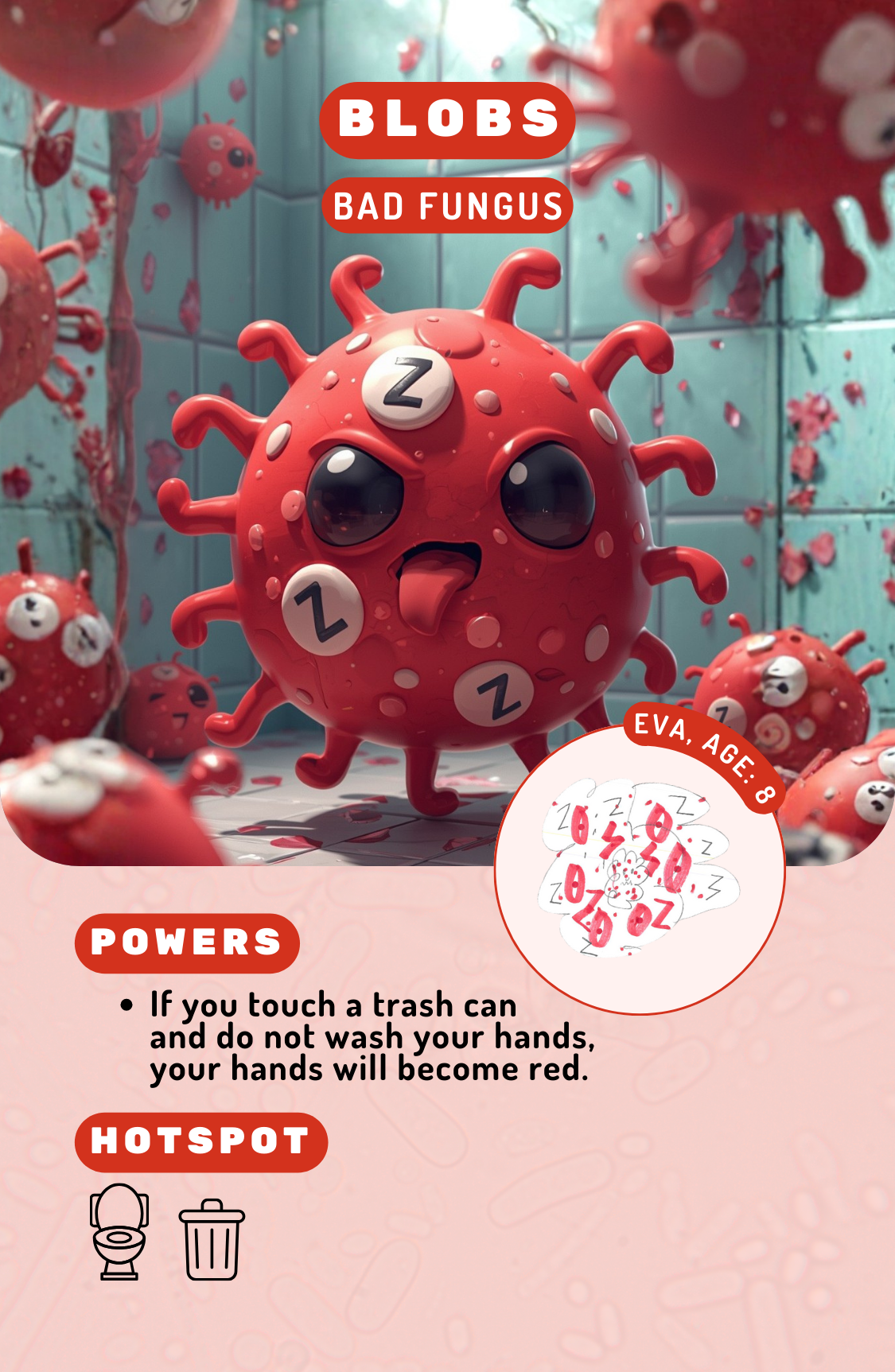
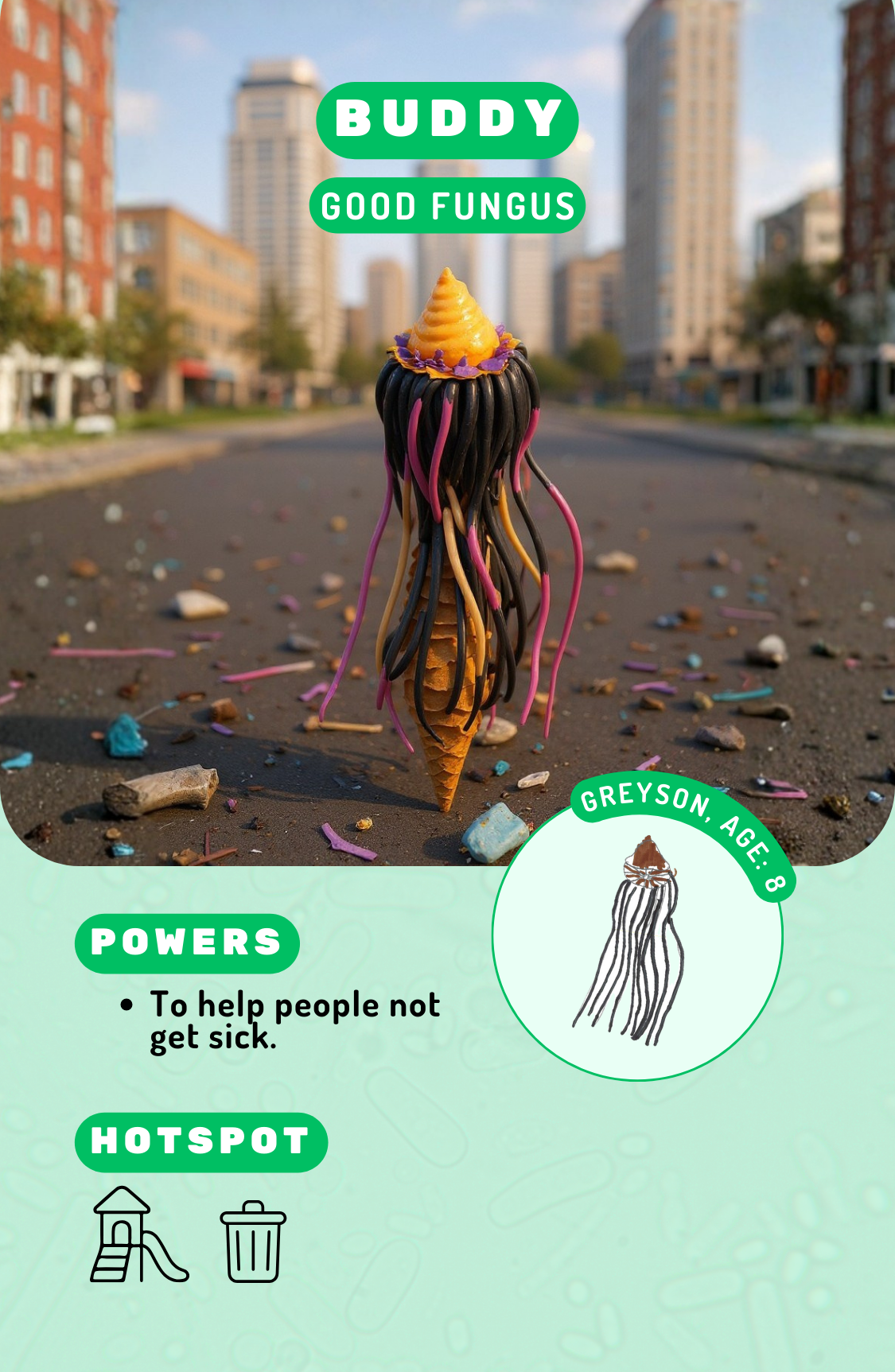
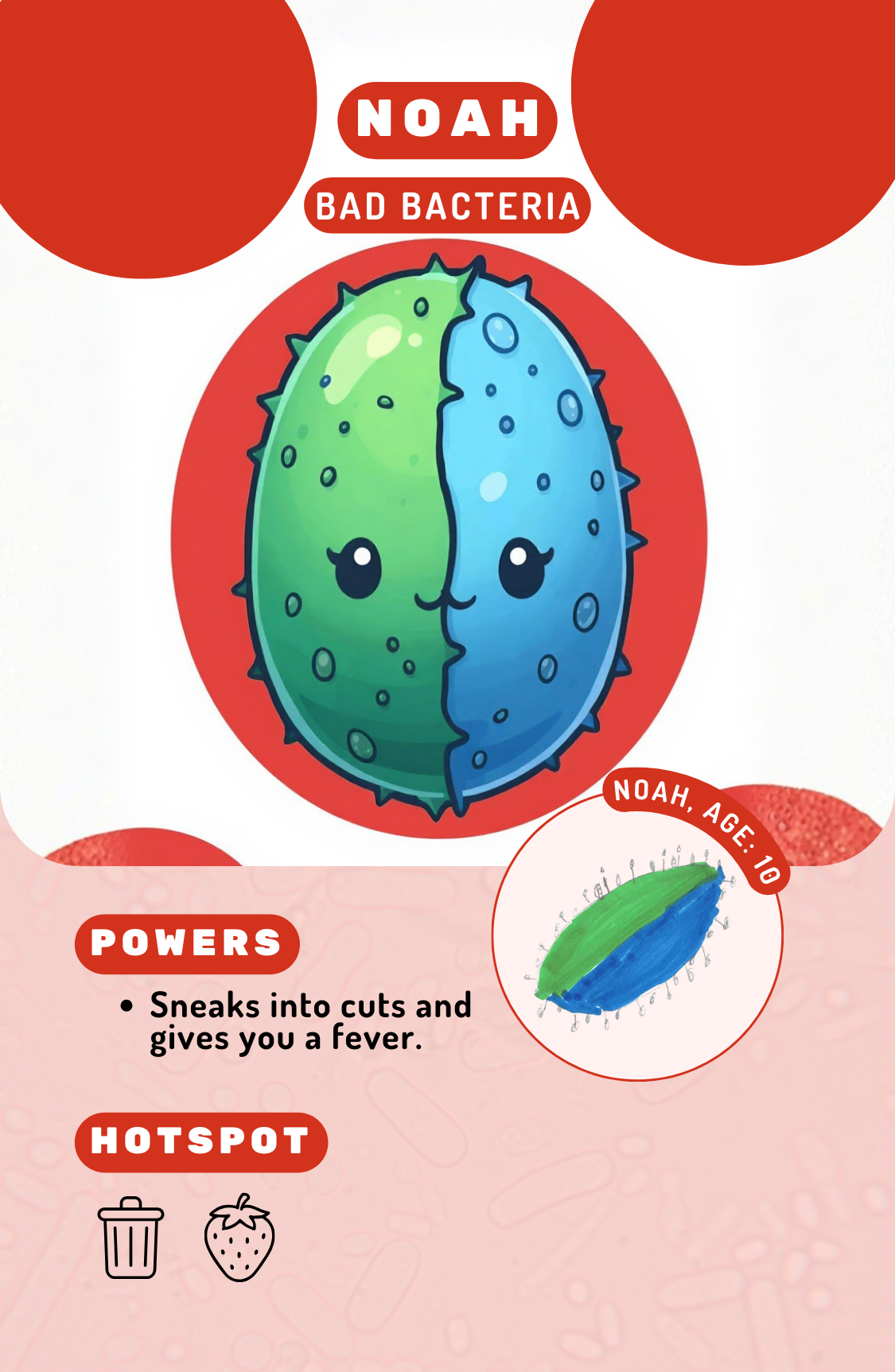
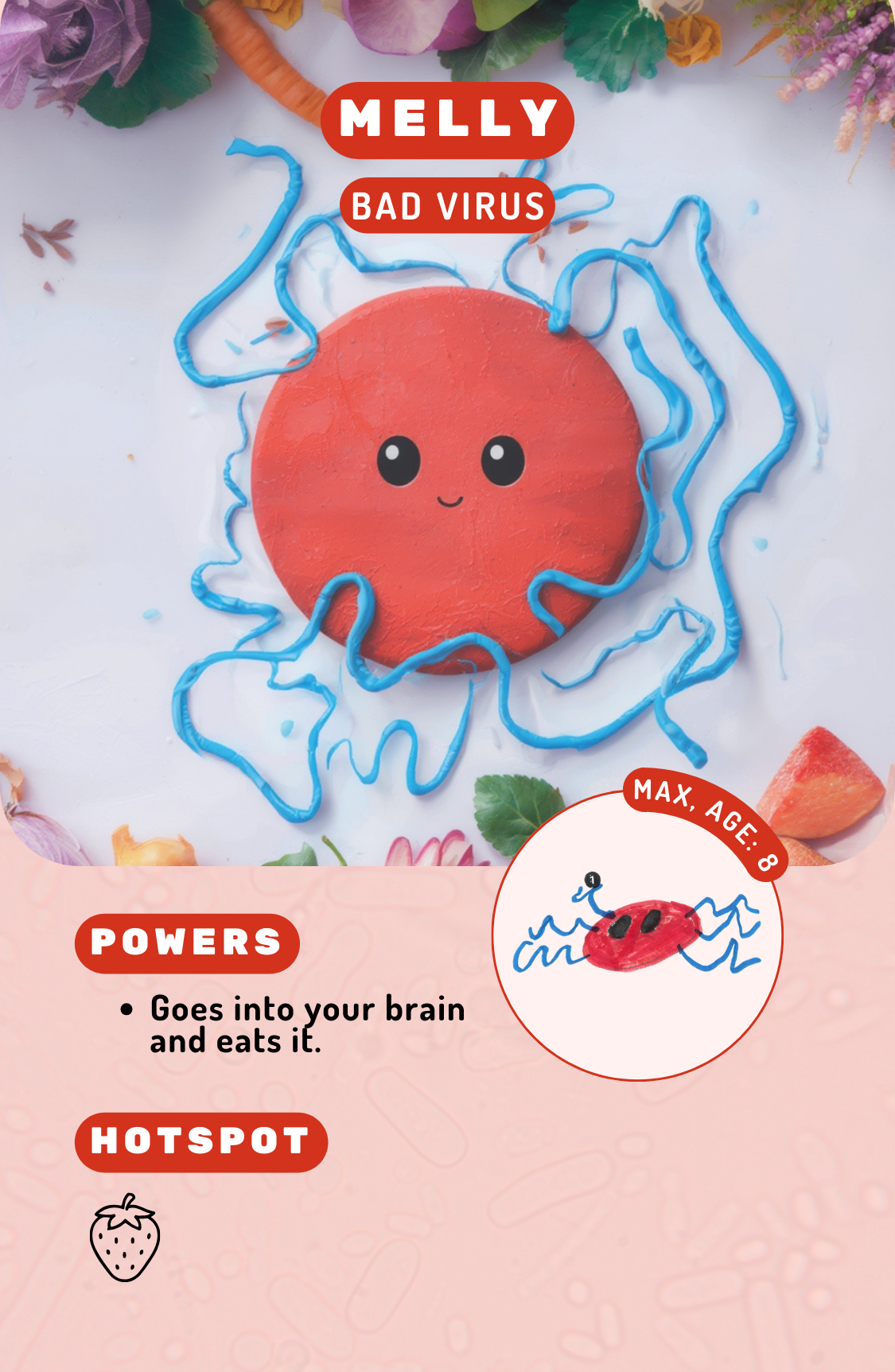
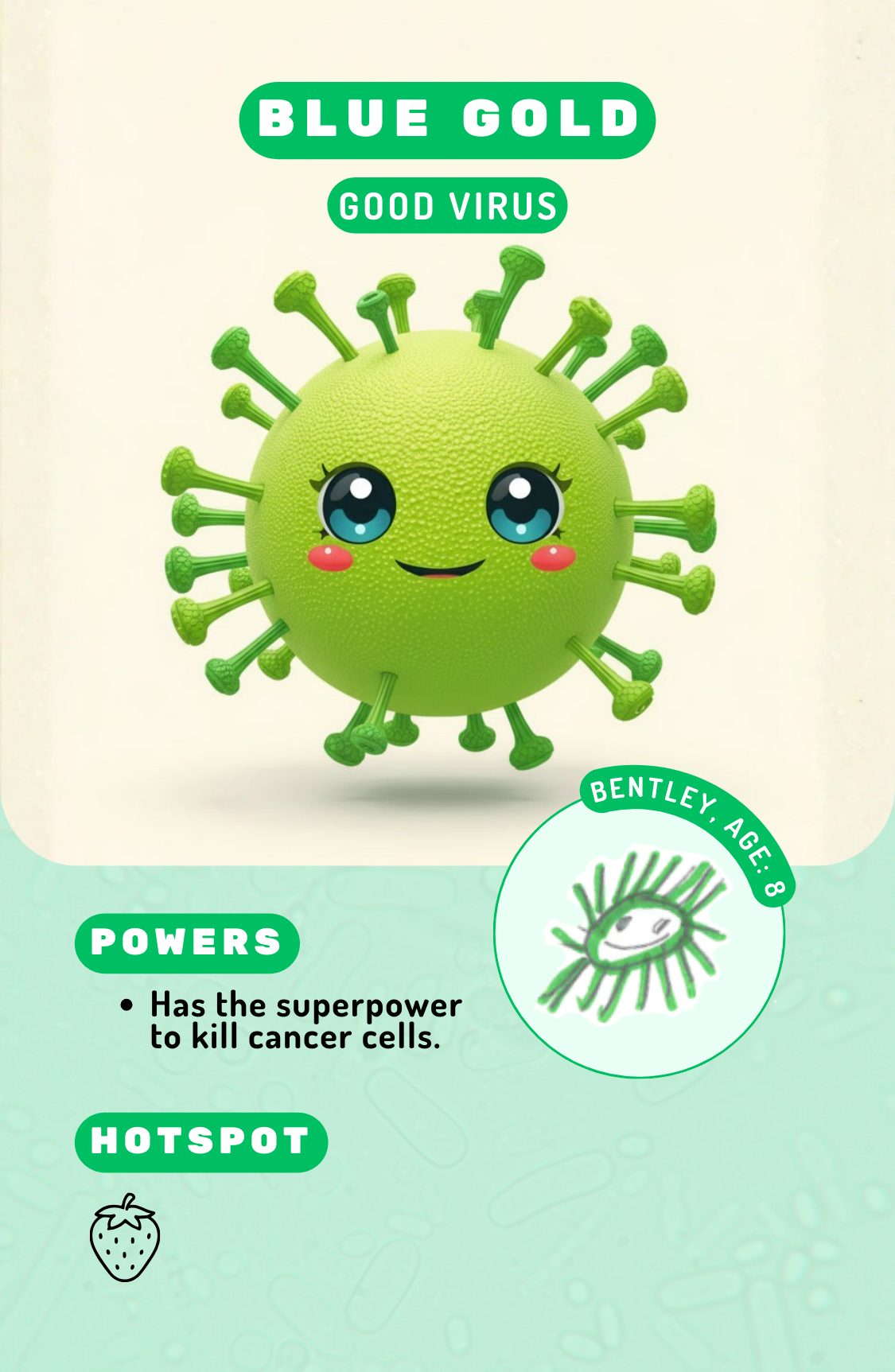
These examples highlight how students understood that microbes can be good and bad: bad microbes might make us sick, while good microbes can support our immune system and even fight harmful germs. Most importantly, microbes can be found everywhere: on toys, at the playground, on pets, on toilet seats, and on trash cans, as well as in healthy foods like strawberries!
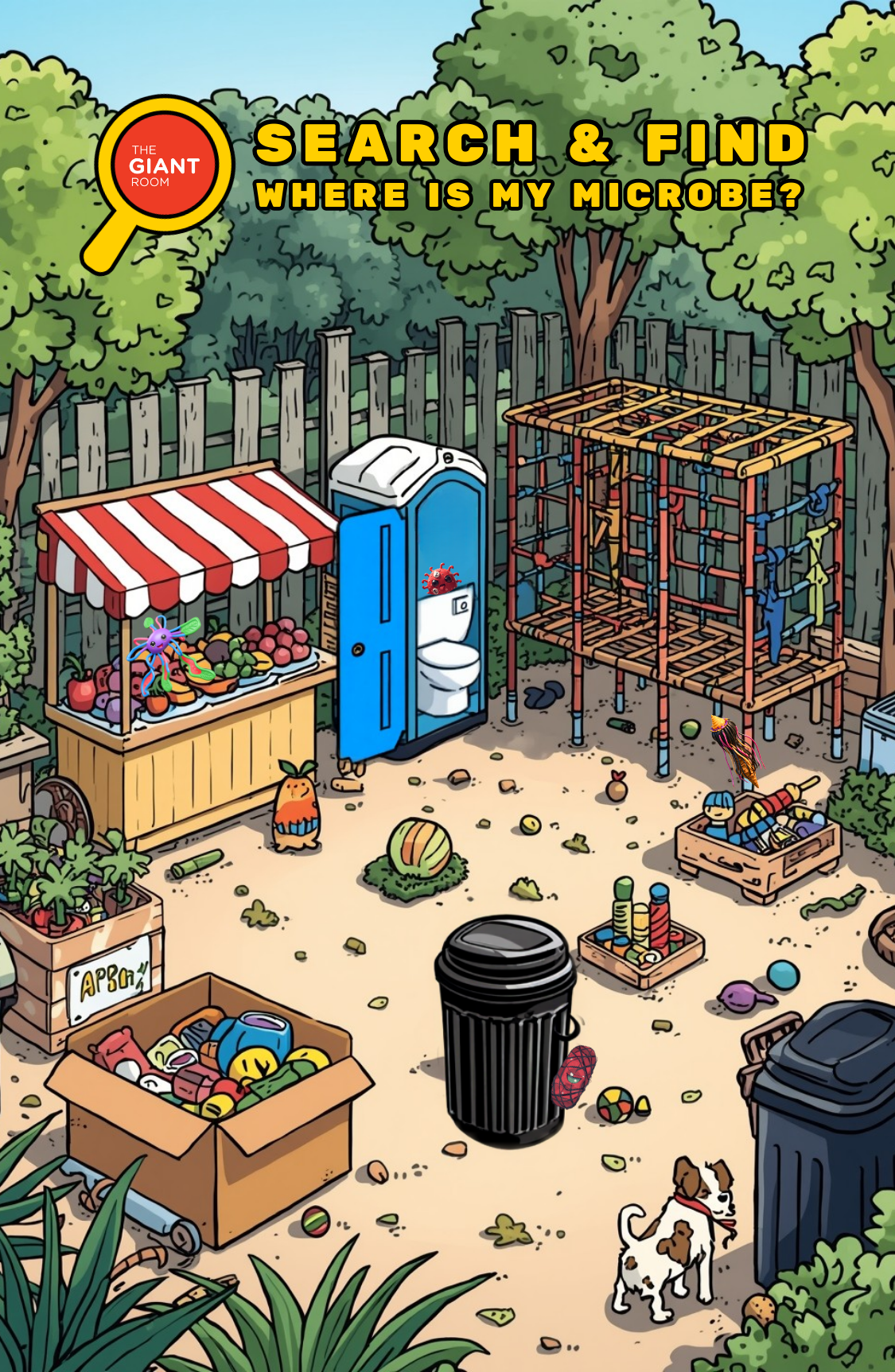
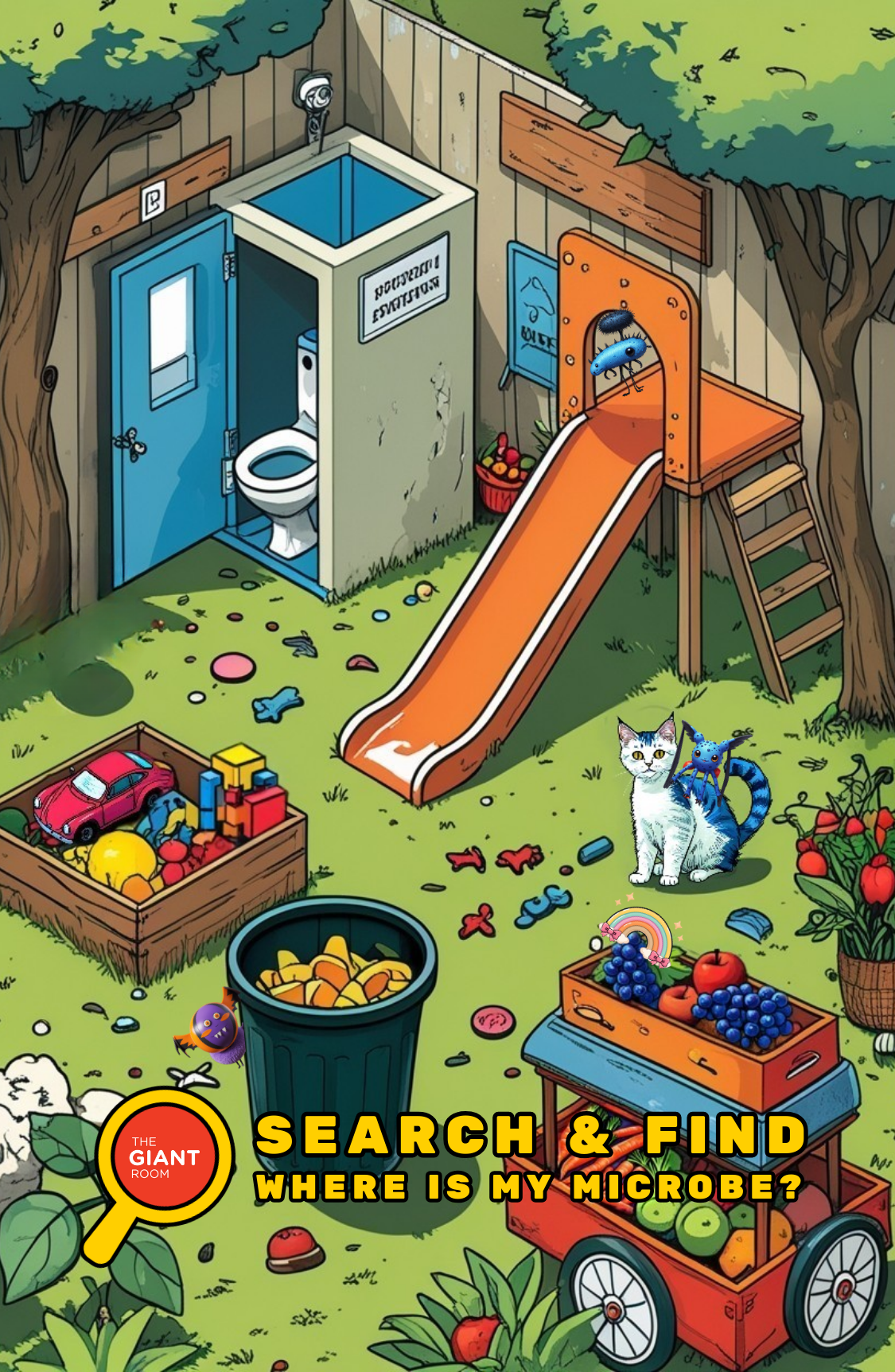
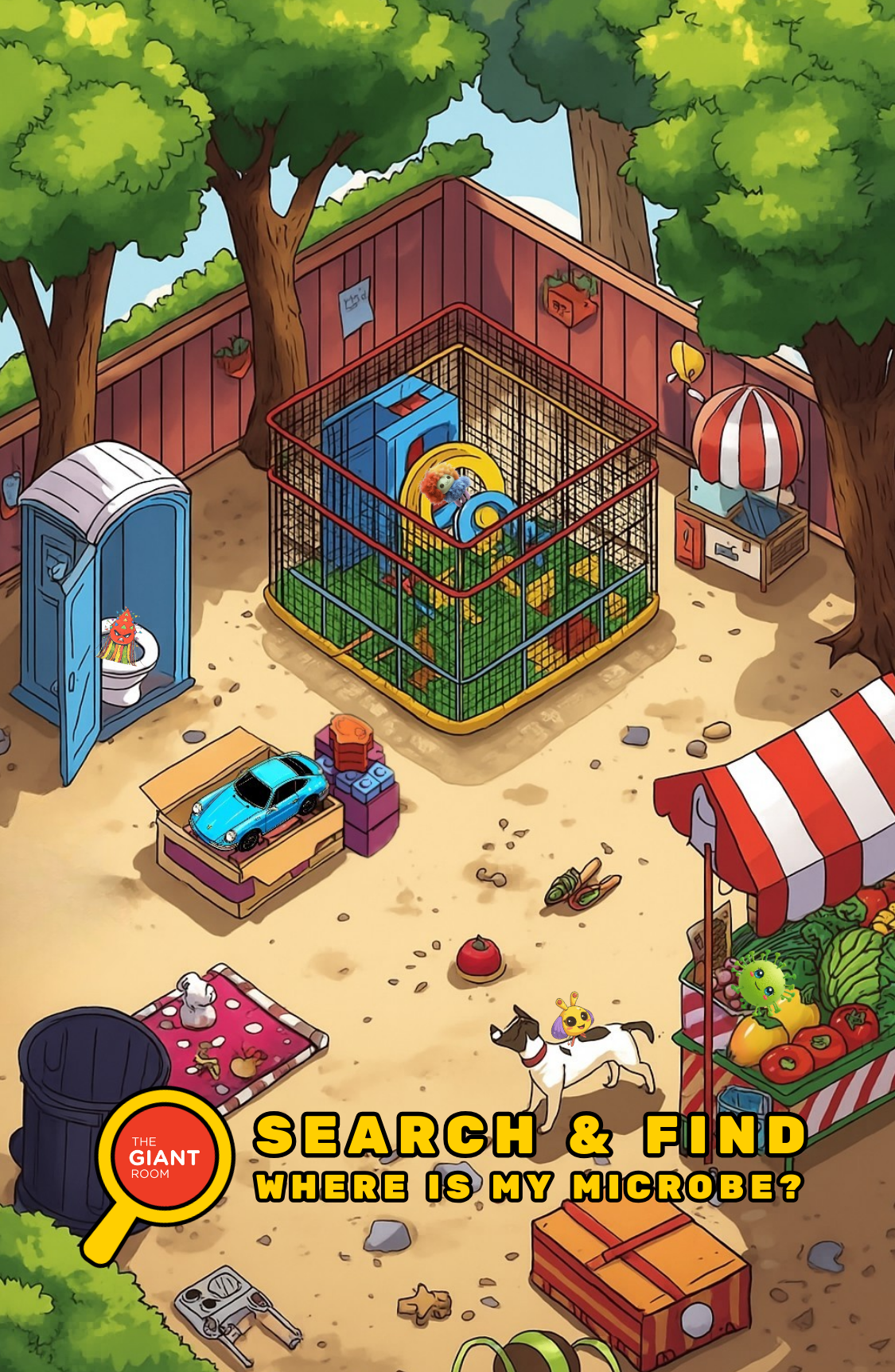
And here’s the twist: flip the card over and the microbe is hidden inside a detailed search-and-find scene. The search-and-find games invite kids practice careful observation and persistence while they hunt.
The search-and-find
This format reinforces a key learning outcome from the program: microbes are everywhere, even when we can’t see them. By practicing spotting “hotspots,” kids learn when it matters most to use healthy hygiene habits, especially handwashing.
Can YOU spot the microbes?
Try this at home (or in your classroom): 3 easy ways to play
Download and print the deck of cards (free download), make your own DIY trading cards, and play:
1) Microbe Hotspot Hunt
Pick 3 cards. Ask:
Where might you find each microbe?
Which hotspot feels “most realistic”?
What’s one habit that would stop the bad ones from spreading?
2) Search & Find Speed Round
Flip a card, set a timer for 60 seconds, and hunt for the microbe on the back scene.
Then ask:
What made it hard to find?
What clues helped?
If microbes are hard to spot… what does that mean for how we act?
3) Build-a-Microbe (kid-designed extension)
Prompt: Invent a new microbe for your school or home.
Have kids create:
Name
Type (bacteria/virus/fungus/protozoa)
Powers
Hotspots
A “defeat plan” (healthy habit that stops it)
If you want to level up: have them draw a mini search-and-find scene and hide the microbe inside.
Explore the Remix & Bring it to Your Classroom
You can check out the published GIANT Game Set: Search & Find Microbe Trading Cards - including the free e-cards and options to DIY or purchase printed copies—on the GIANT Room site.
And if you’re an educator looking for a playful way to make health + science standards feel alive: this is your sign to turn “germs” into a story kids can actually hold onto. Contact us to bring GIANT Remix into your classroom!
Read More About GIANT Remixes: